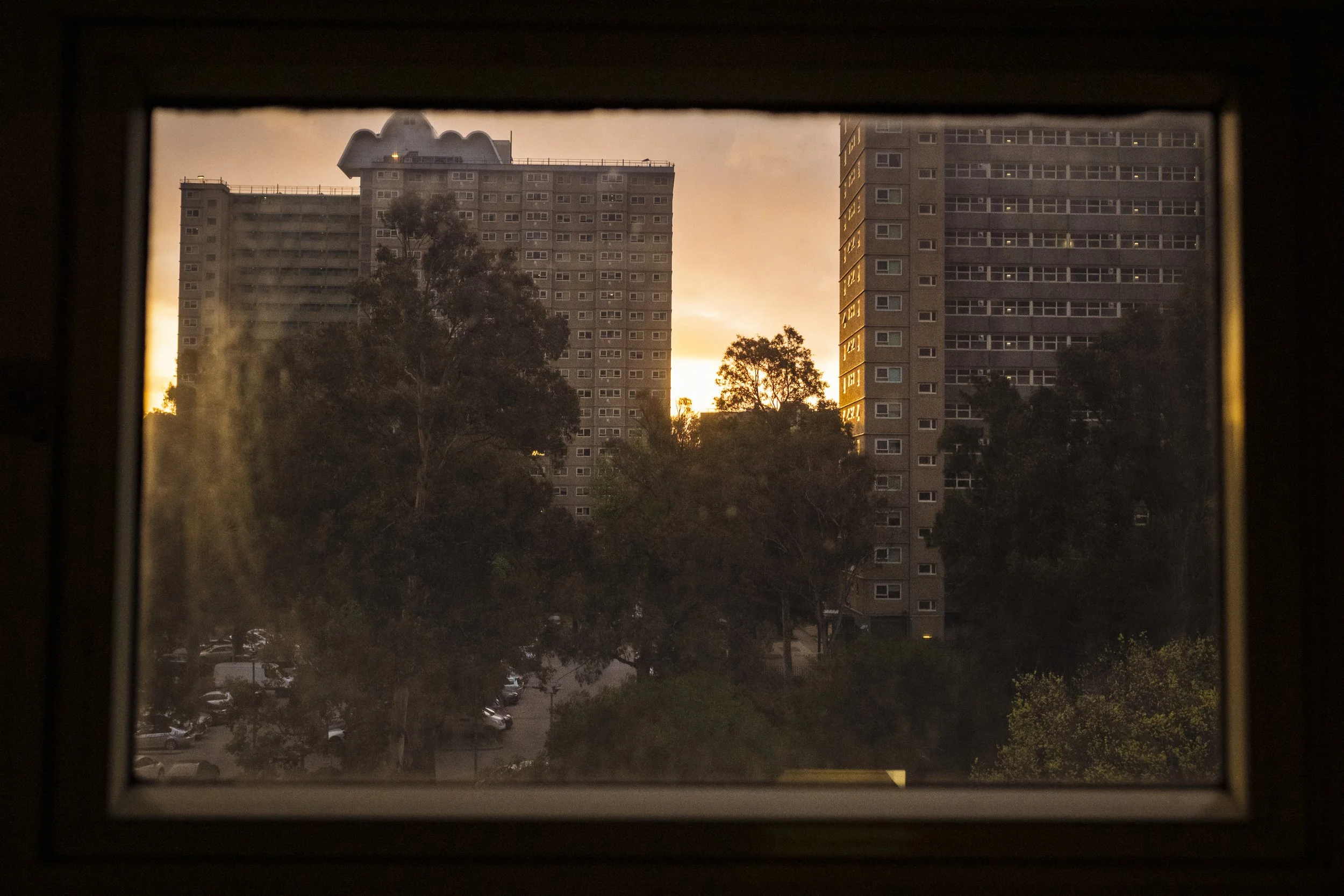
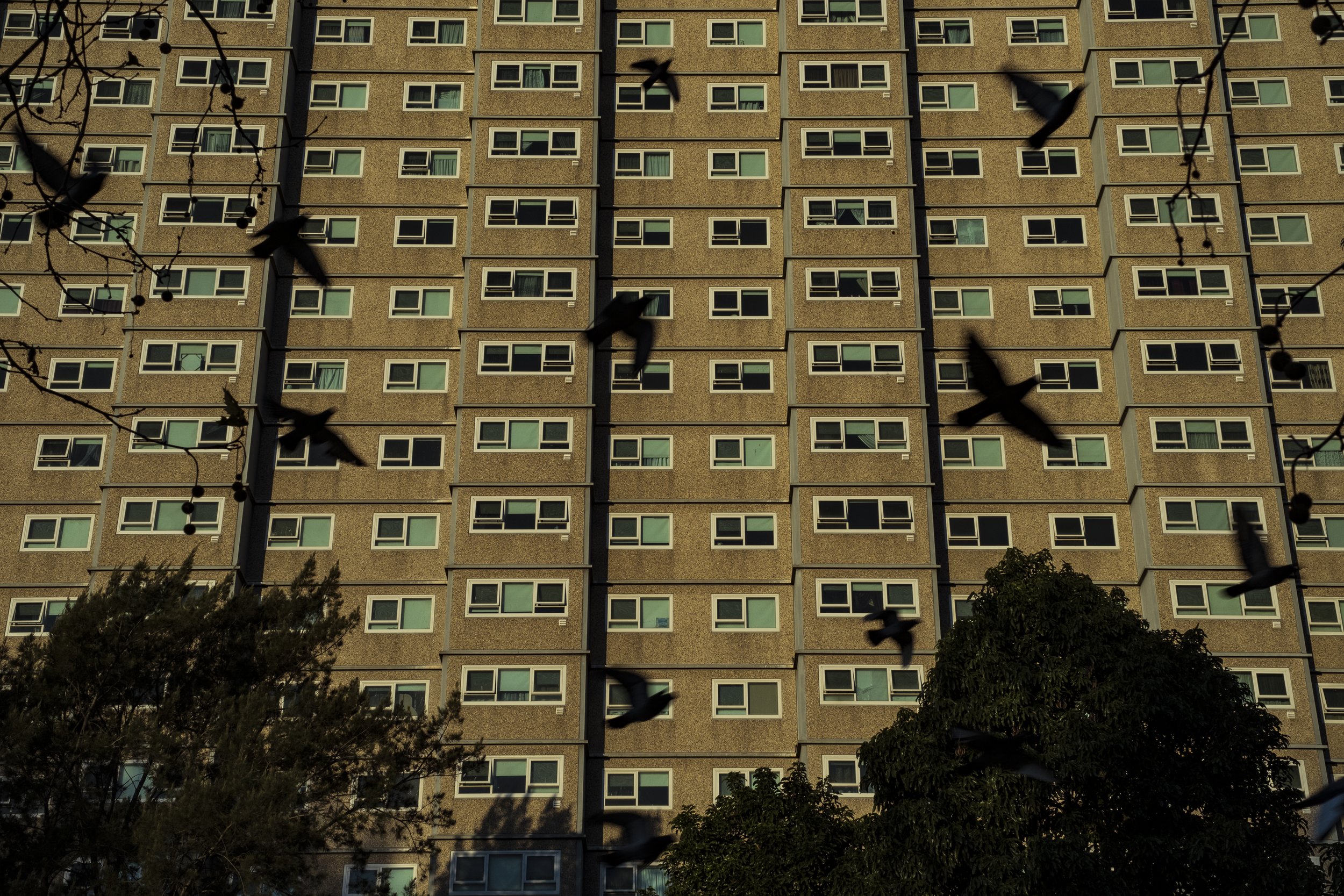
1 July 2021, 130 Racecourse Road, Flemington, Australia. The Flemington Housing Community towers are seen at sunset as the local flock of Pigeons, synonymous with the towers, look for scraps in the park. Once a bustling area of children playing, dealers hustling and residents scurrying with laden bags of groceries, the communal area during Covid is mostly empty, so scraps are hard to come by.
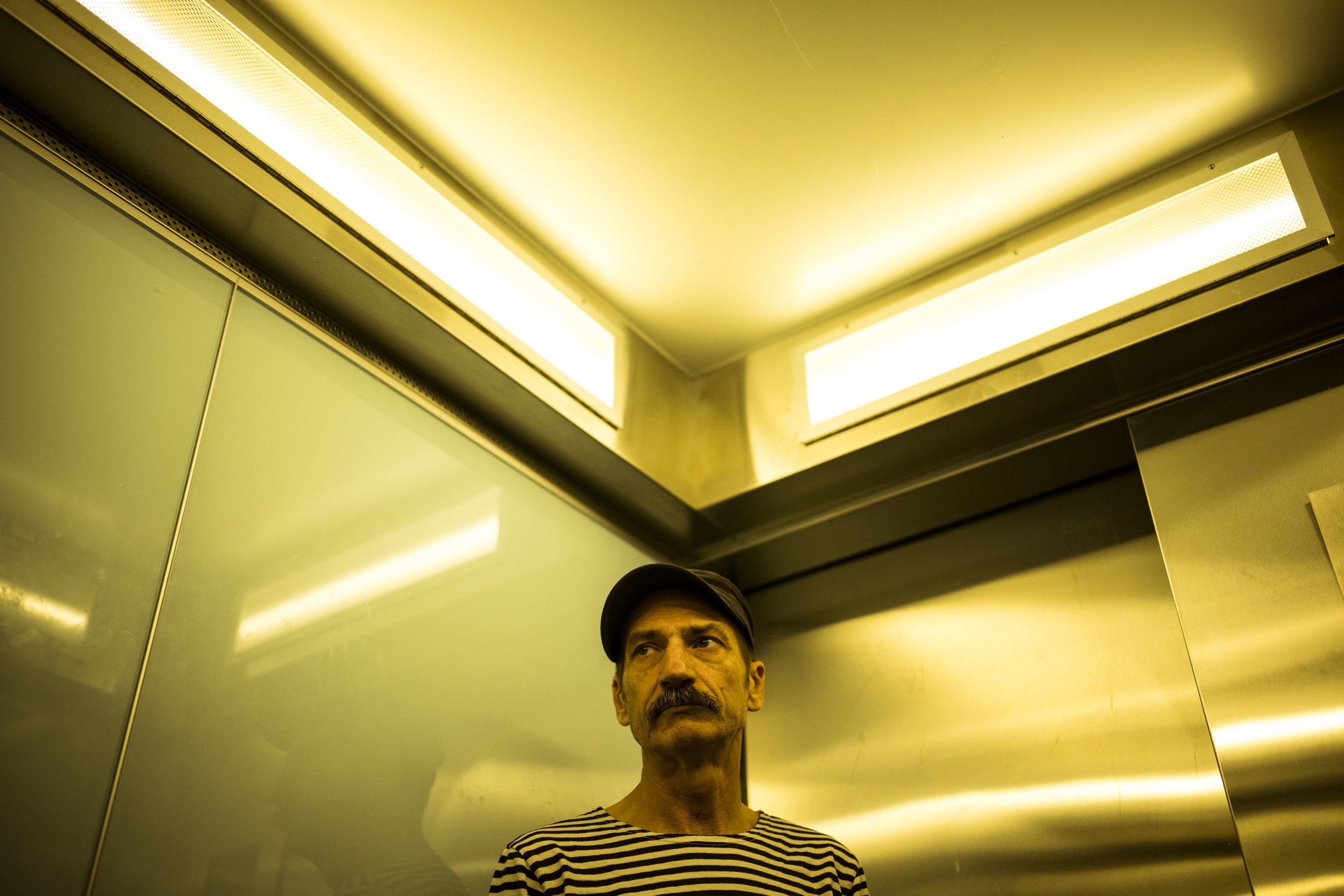
8 October 2025. 1 Holmes Street, Northcote, Australia. Ian 'Hank' Ferguson rides the lift to his tenth-floor apartment in the Northcote towers. Hank, 60, found sanctuary in 2022 in the Northcote tower. It was his escape from homelessness after a breakup that left him shouldering the $250-a-week rent alone in an “atrocious” private rental.
Public housing is often referred to as the last safety net before homelessness. The September 2023 decision by the Victorian State Government to demolish the 44 remaining public housing towers, displacing their residents and dividing communities, will have implications for Melbourne’s rising homelessness issue. Public housing advocates like Hank say the overall number of apartments will be reduced, thereby reducing the available housing on offer, meaning it is more likely that those on waiting lists seeking housing will have to remain homeless and remain on wait lists for years to come.
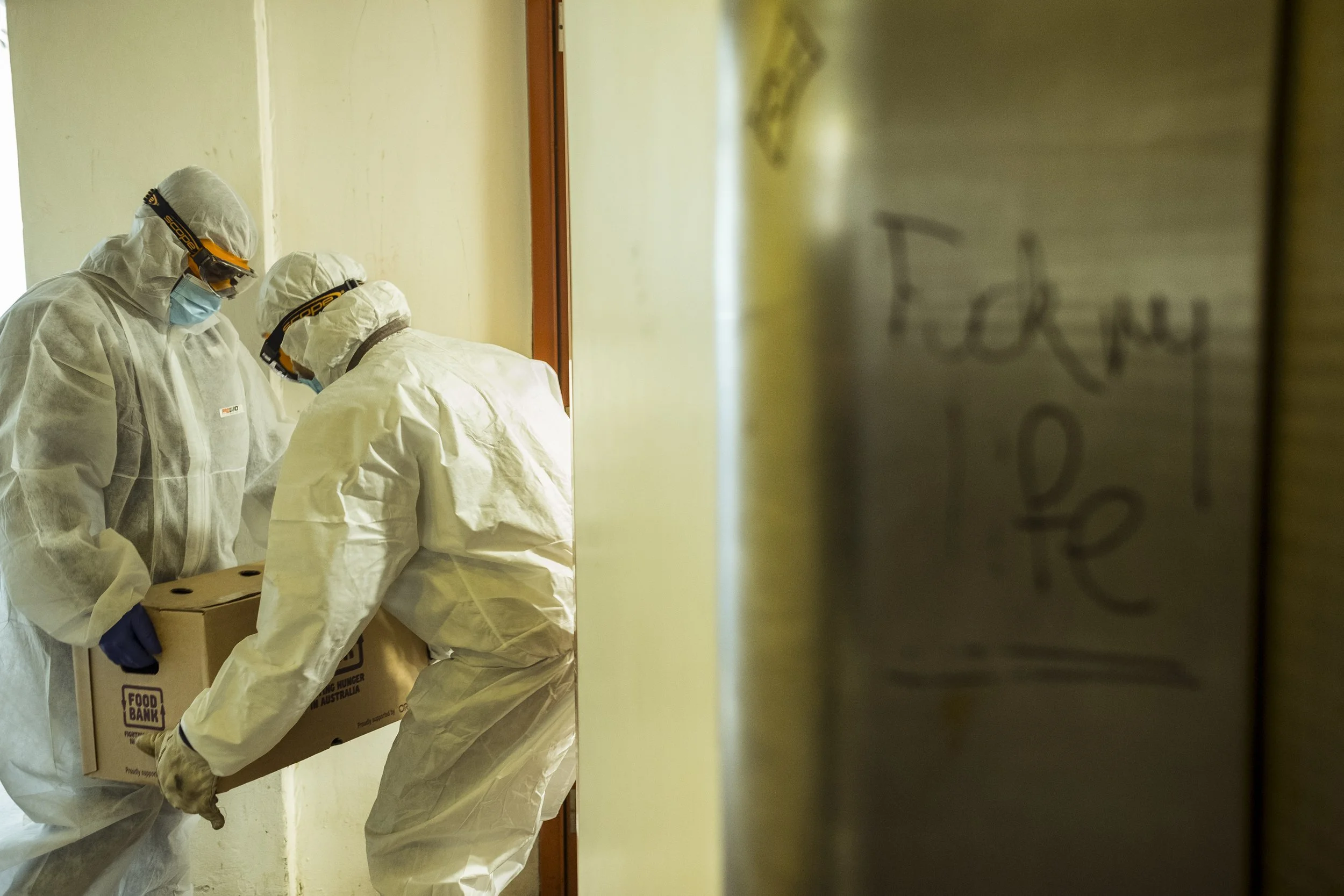
10 July 2020. Canning Street, North Melbourne, Australia. Twelve hours after re-opening to its residents, Government appointed cleaners are tasked with deep cleaning the Canning Street housing estate in North Melbourne. The building was in enforced lockdown for five days after cases of Covid-19 were traced to the Housing Commission apartments in North Melbourne and Flemington. Hallways and the towers foyer were stacked with rotting food and supplies. The goods were well intended but breakdowns in communication between residents and the emergency services tasked with enforcing the lockdown meant that authorities confused collection and delivery procedures. Some residents reported not receiving medication or food for days.
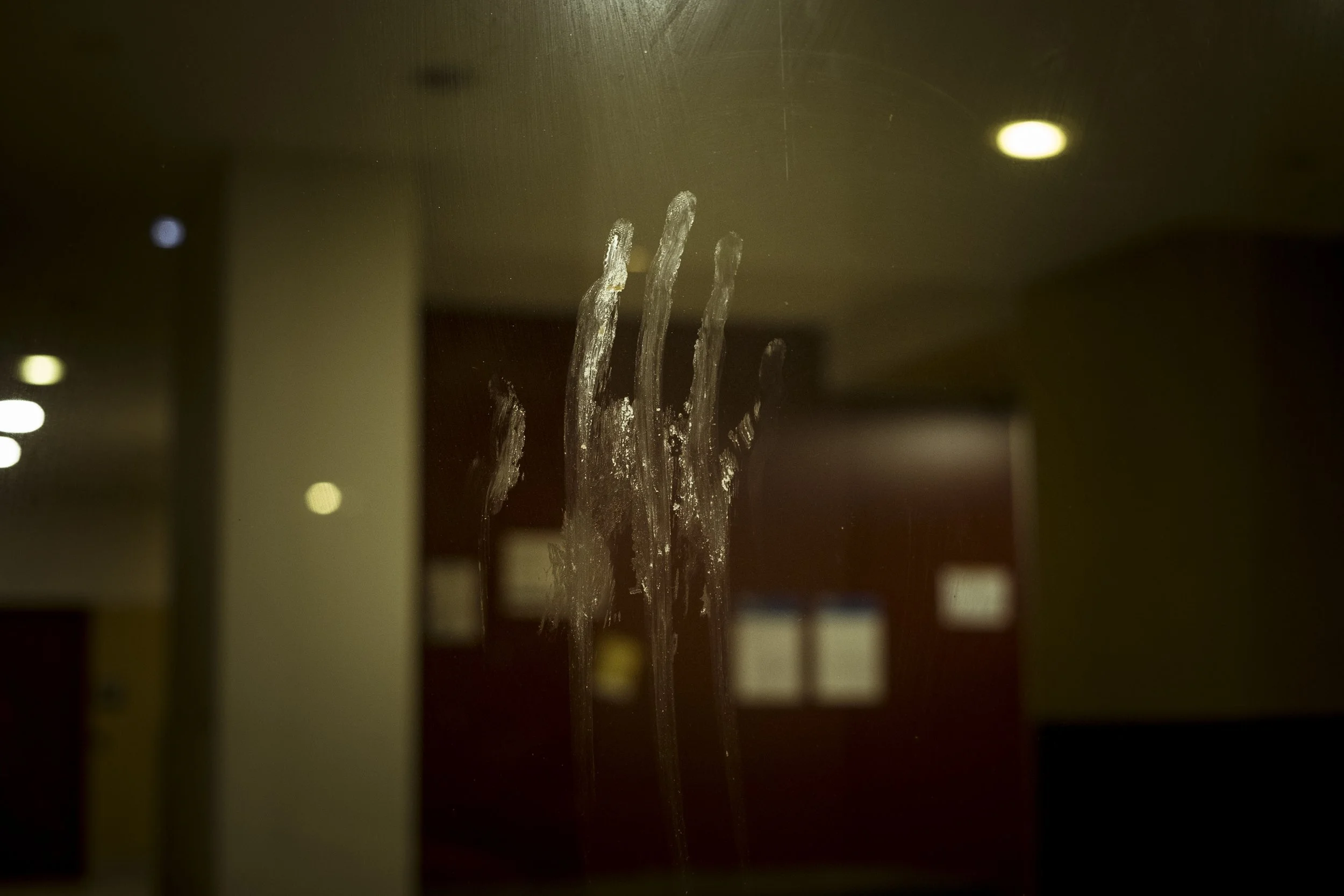
3 June 2021, 130 Racecourse Road, Flemington, Australia. The front entrance to the apartment complex at 130 Flemington is smeared with a handprint of an unknown substance.
Since the enforced lockdown in July 2020, deep cleaning for Covid-19 in the government run housing commission apartments has been a point of conjecture for residents. This hand print was still visible ten days after this image was made, clear evidence of the lack of practical communication between Government agencies and residents.
Tasks such as cleaning public areas, gardening or vaccinating residents are seen as a singular, outsourced jobs by Government agencies. For the residents these tasks are seen as a basic need. When these tasks are not performed, it can lead to a perception amongst the residents as a slight on their rights as citizens which sows seeds of doubt about their standing within the fabric of society.
3 June 2021, 130 Racecourse Road, Flemington, Australia. Nor Shanino was raised in the Flemington Towers. Now a community youth worker, Nor was heavily involved in the effort by local youth groups to organise mental health support and care packages for those, including his father - who is auto-immune compromised - who were forced into lockdown. He witnesses and manages the misinformation pervading the residents lives daily, “Some kids are out there saying, ‘Black people can’t get Covid-19.’ I’m like, ‘Where did you hear this?’ ‘It’s on a YouTube clip.’ I’m like, ‘You know I can go home and make a YouTube clip!’” He now acts as a conduit, providing accurate, timely information between Government services and the residents.
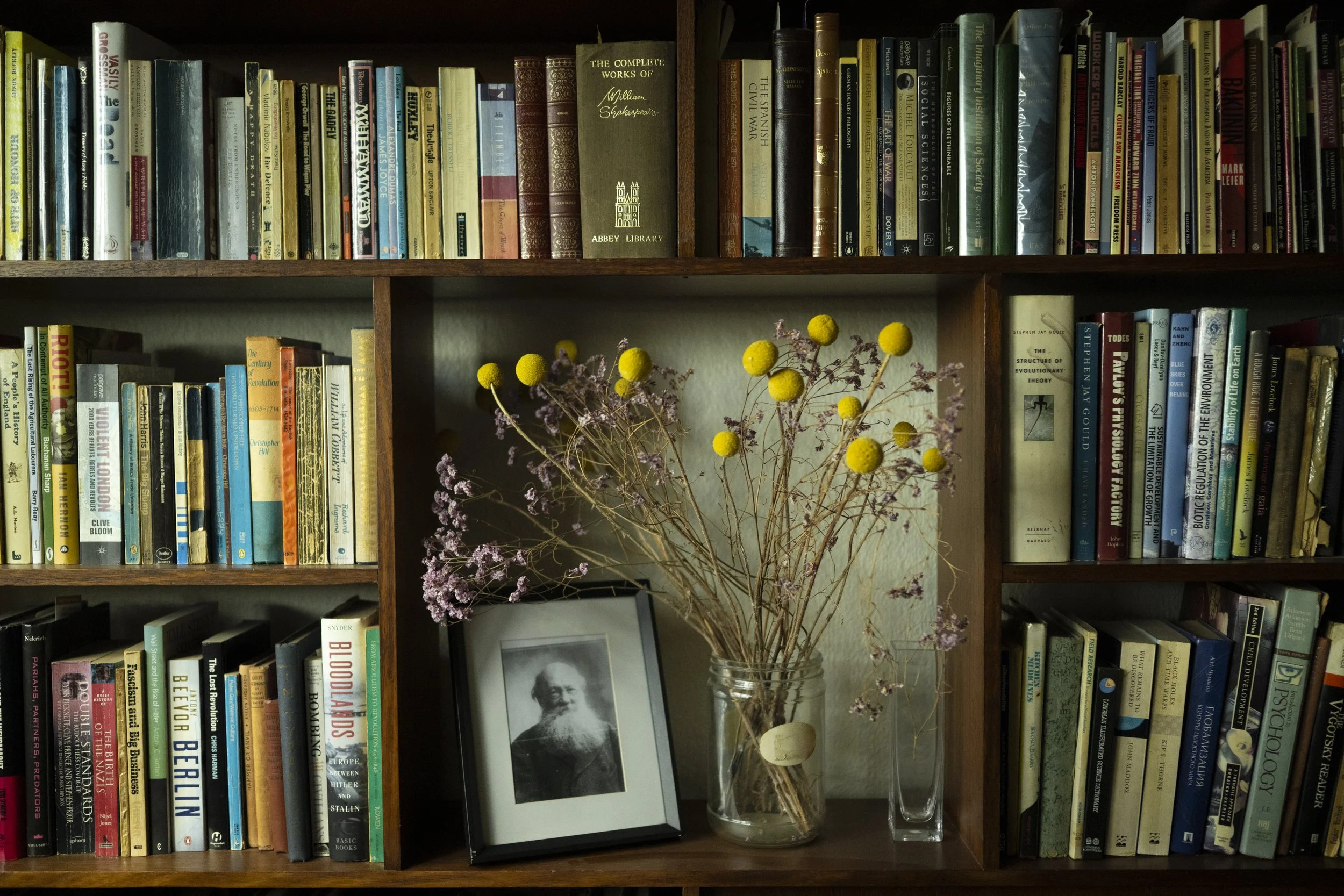
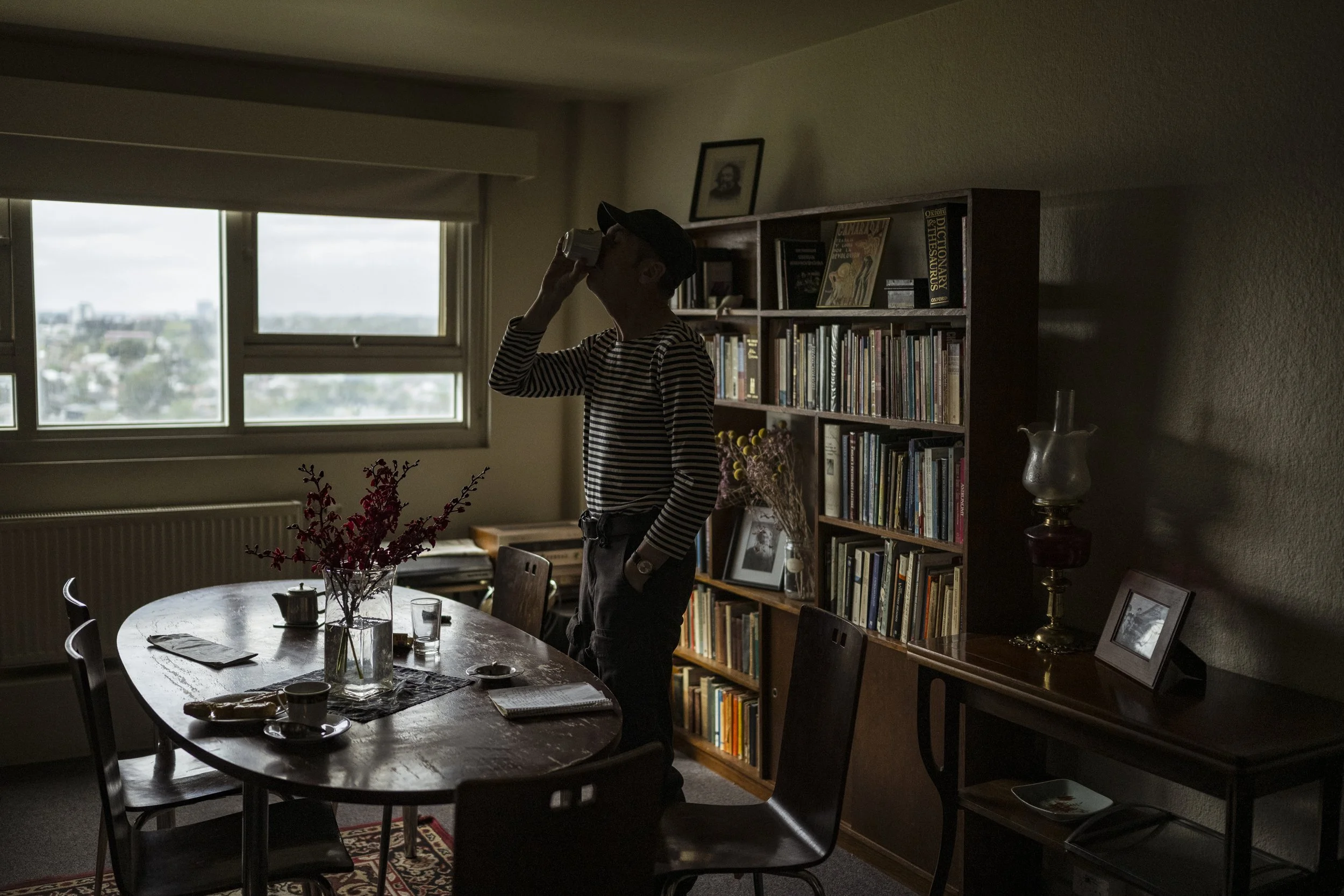
8 October 2025. 1 Holmes Street, Northcote, Australia. Inside Ian 'Hank' Fergusons Northcote apartment, a bookshelf containing Hank's books on politics and revolutions and a portrait of Russian anarchist Pyotr Kropotkin.
'Hank' Ferguson is a dedicated advocate for public housing and is deeply opposed to the demolition, to the point in August 2025, he was arrested after locking himself to a drilling rig at the site of the demolition of a tower in Racecourse Road, Flemington. He believes that as a beneficiary of these towers—which were born from the slum clearance projects —he is morally bound to protect what they stand for.
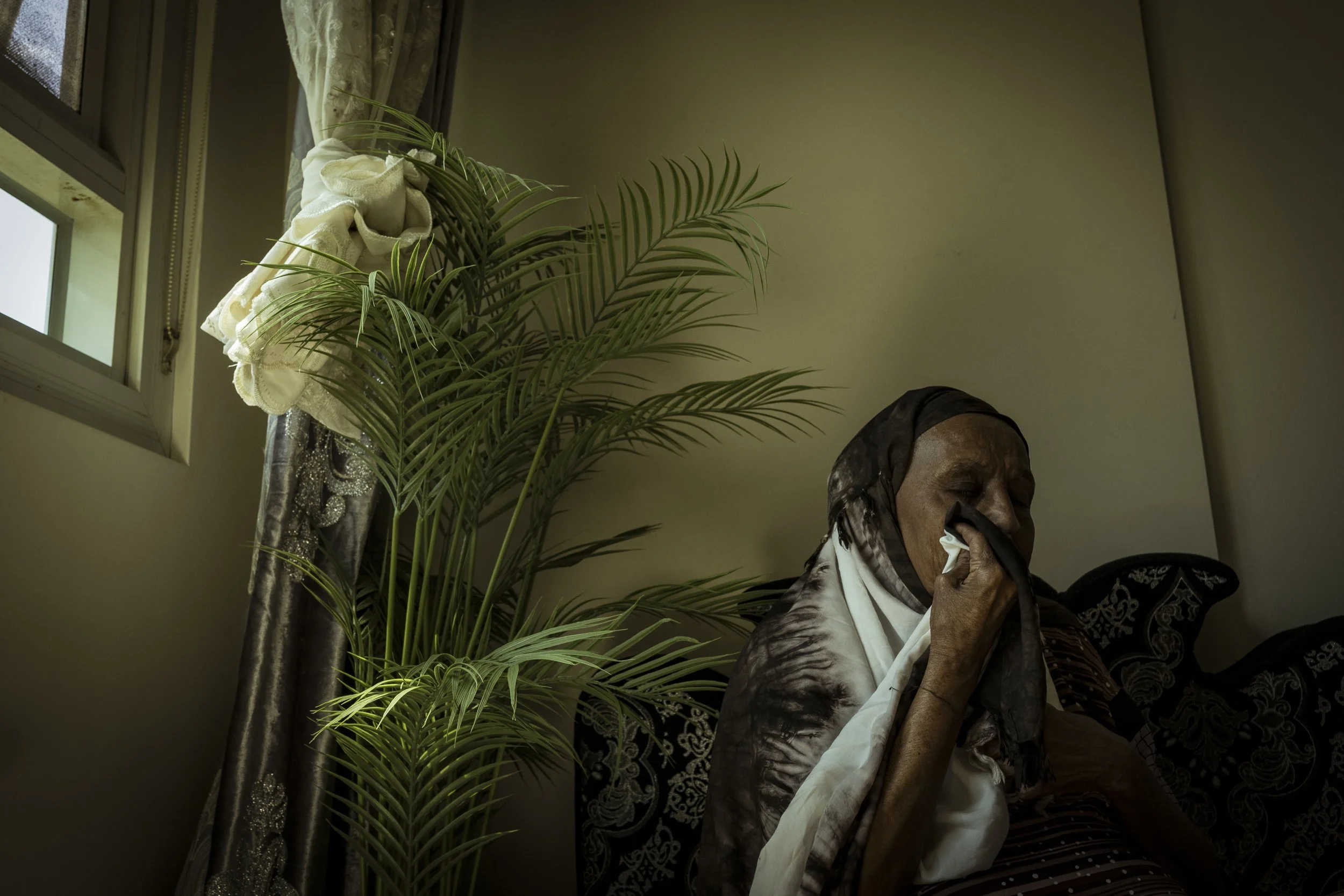
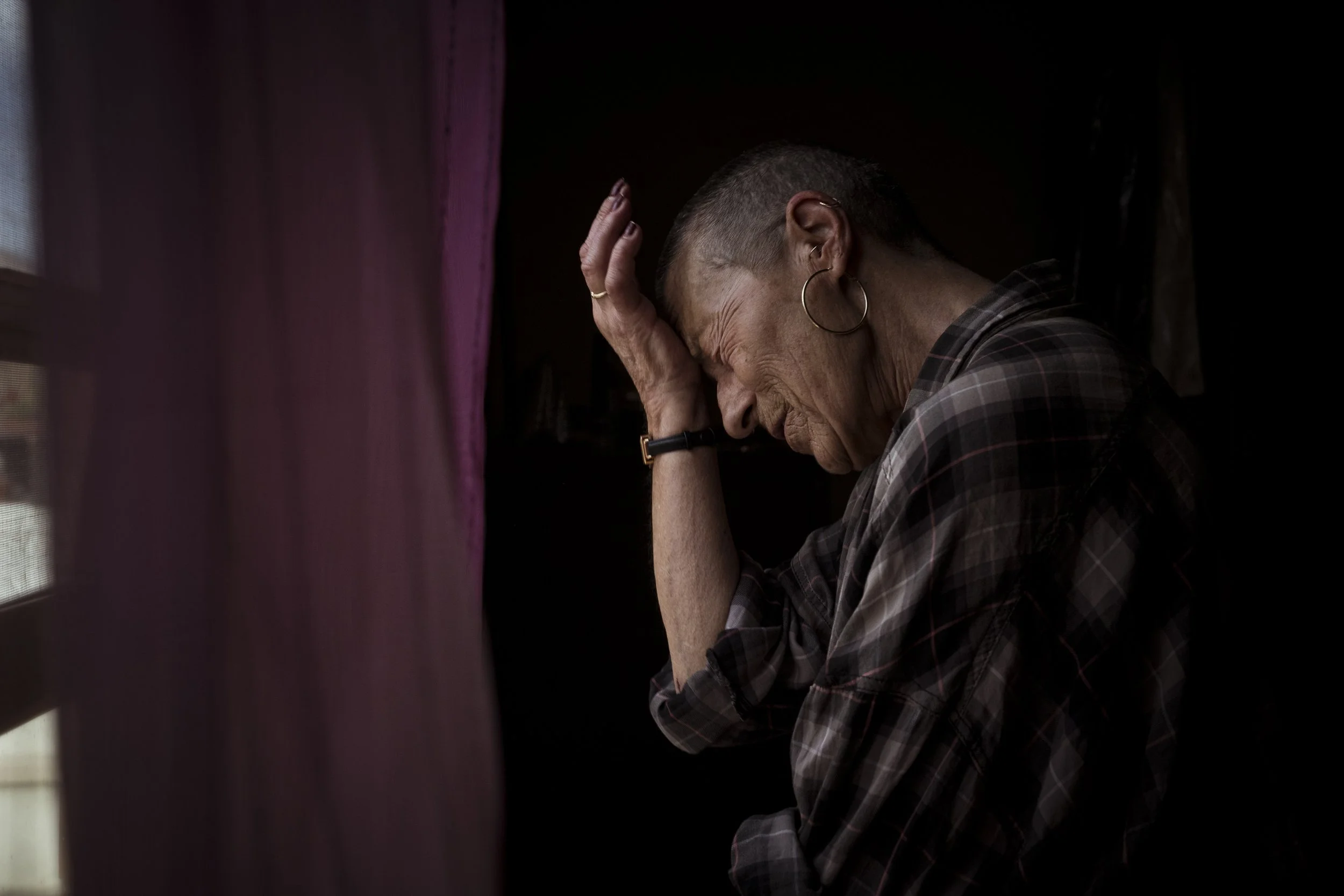
6 February 2025. 33 Alfred Street, North Melbourne, Australia. Hawa Del wipes away tears of frustration as she talks of her forced eviction from the North Melbourne towers.
Hawa has lived in her apartment for 34 years and the 58-year-old Somali Australian community leader has been offered a one-bedroom flat nearby. She refused the offer, as her current home is a vital hub for her five grandchildren, who she cares for while their mother works as an aged care nurse on weekends and weeknights. Hawa’s adult son, who recently completed a PhD, also lives with her.
“I’m not moving,” she says. “I have pride.”
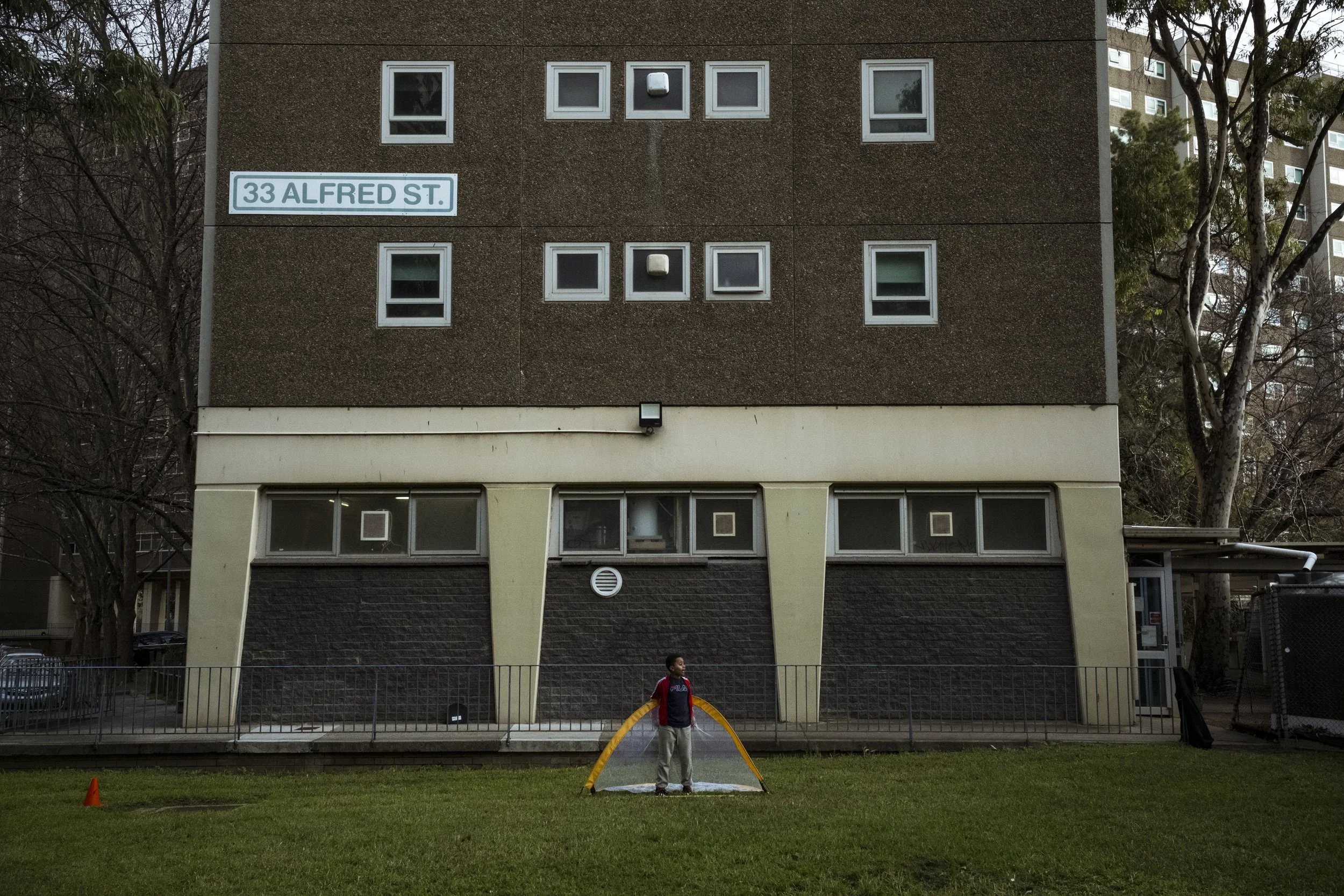
22 June 2024. 33 Alfred Street, North Melbourne, Australia. At a local celebration for Eid, a young member of the local Somali community stands in goal during a local footbal match between residents of the North Melbourne Public Housing estate.
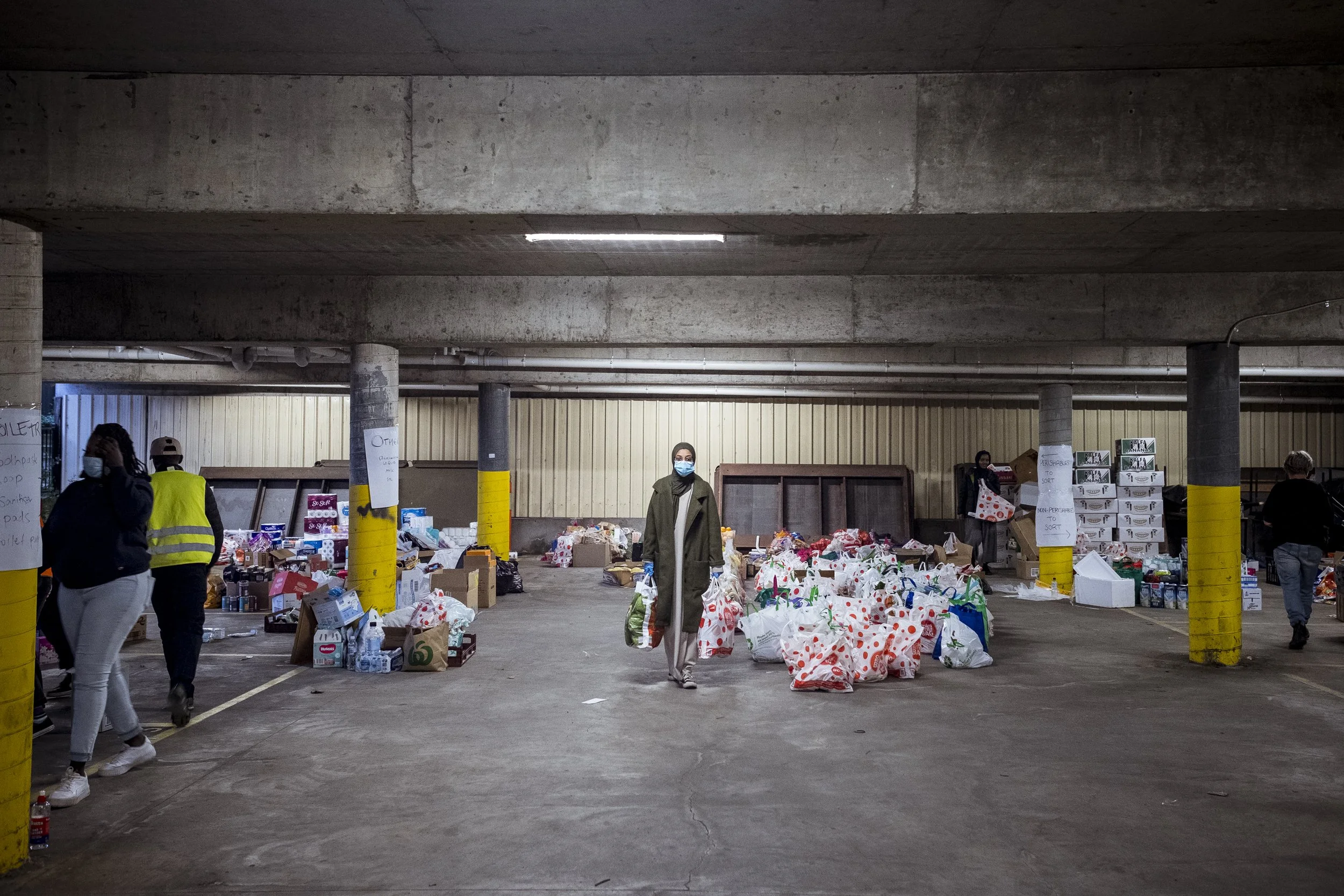
7 July 2020. North Melbourne, Australia. Hiba Shanino collects food and care items from the carpark of the Australian Muslim Social Services offices to take to those residents under enforced lockdown in the Alfred Street public housing towers. Hiba Shanino is a resident of the Flemington Housing Commission complex but fled when she heard rumours of a hard lockdown. Her parents are locked down in the towers.
Local youth groups banded together in an unofficial coalition to collect and distribute care packages to locked down residents across the enforced lockdown. Although most of the packages got inside the towers much of them did not reach the residents and sat rotting and useless in foyers and hallways as residents, most with English as a second language, were too afraid to leave their apartments for fear of retribution.
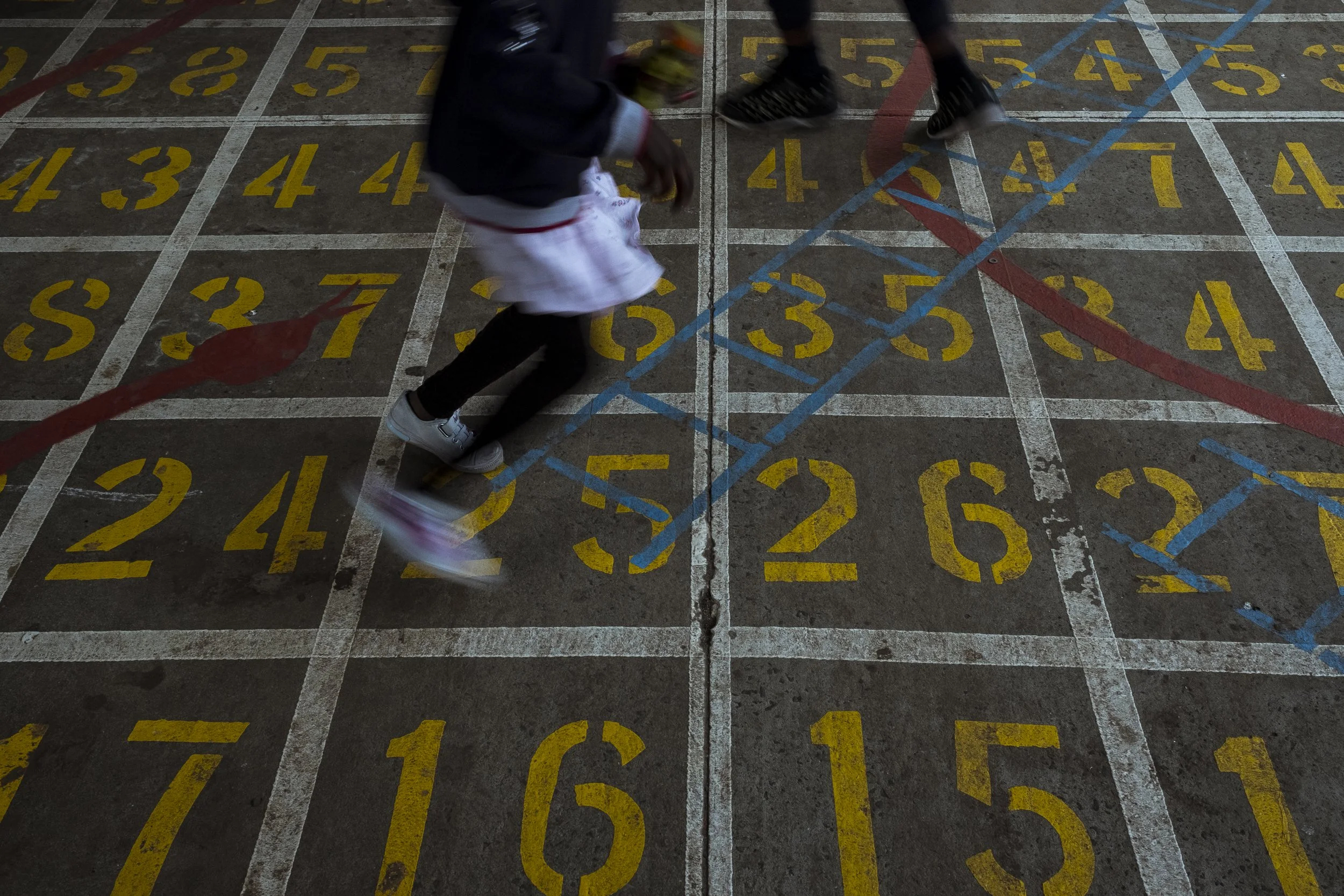
9 July 2020. Wellington Street, Collingwood, Australia. Children play on a snakes and ladders board painted on concrete at the Collingwood housing towers.
“The parks were pristine. I remember hanging on the monkey bars, and the scenes through the trees were so pretty. Or we painted, or community organisations would get involved and decide what the kids would do. It was just a huge adventure. All of our cousins, all our friends, met there. We were tiny so everything was oversized to us. Late to us was when the street lights came on. I really felt like the park was the most magical place on Earth.” - Awak Kongor, resident of the Collingwood Public Housing towers.
9 July 2020. Wellington Street, Collingwood, Australia. A resident playing badminton is dwarfed by the Collingwood public housing flats reflected in a puddle at Unity Park.
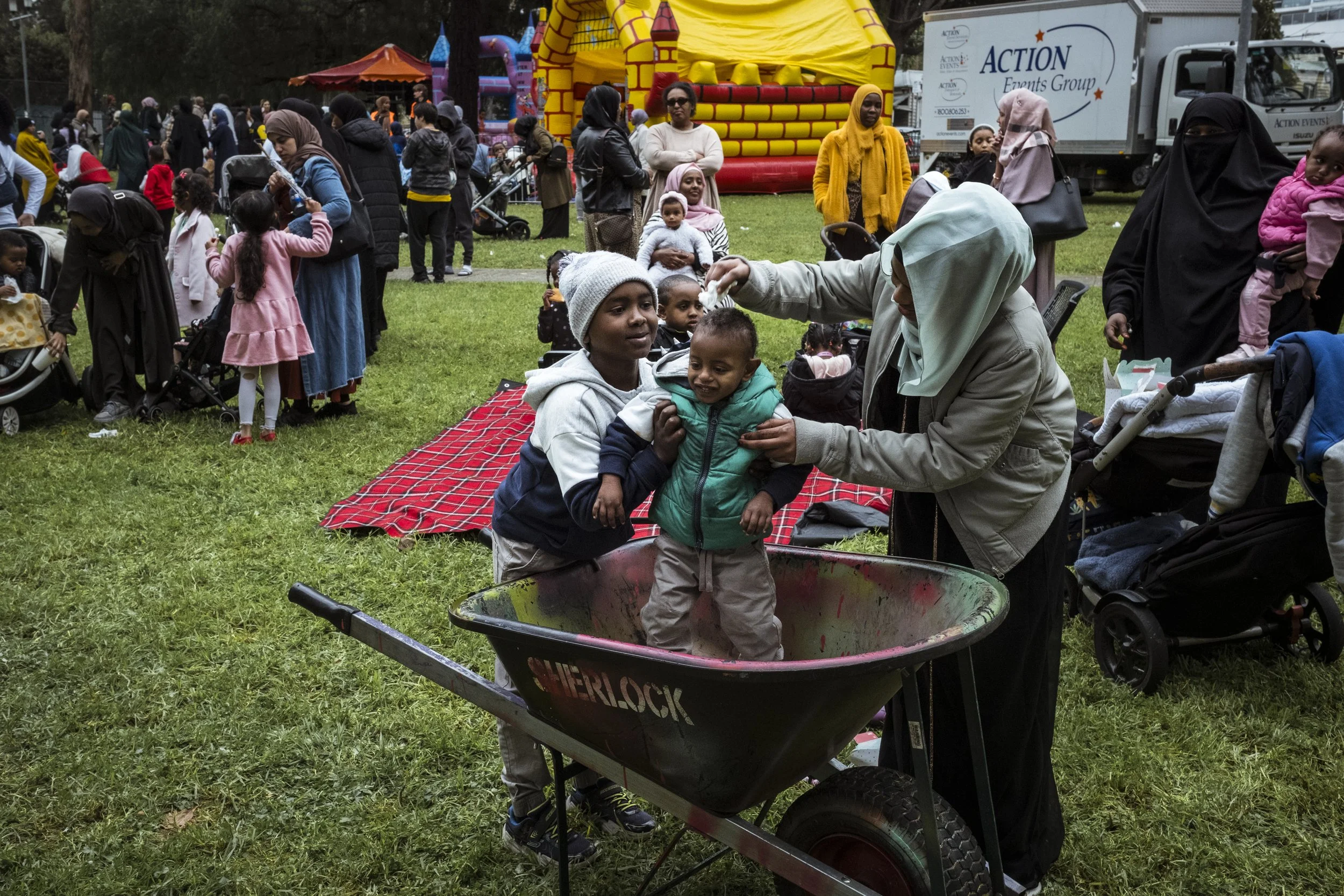
22 June 2024. 33 Alfred Street, North Melbourne, Australia. Young public housing residents play in a wheelbarrow at a celebration for Eid organised by the local Melbourne Somali Community group.
Tightly knit diaspora communities will be hard hit by the decision to demolish the public housing towers. The demolition process will require Homes Victoria (who oversee the Government public housing system) to relocate families during the rebuilding process. This process has been earmarked to take place in early 2025, spanning the following four years, separating many families from not only community-based infrastructure such as schools, local health facilities and sporting clubs but friendships and support networks.
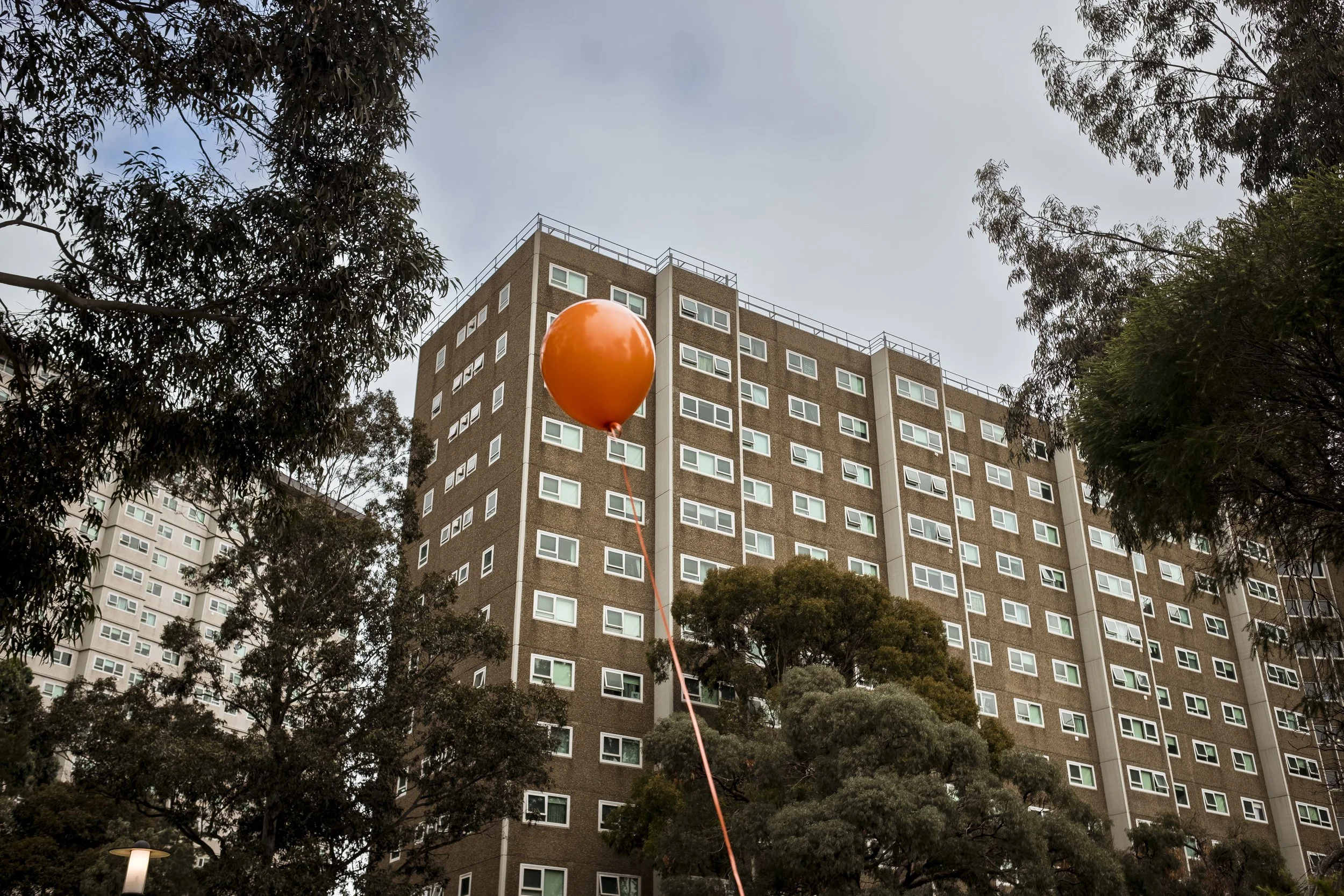
7 July 2020. Flemington, Australia. A balloon floats past the Flemington Housing towers as the residents of the towers are subjected to an enforced hard lockdown during the Covid-19 pandemic.
On the 4th July 2020, nine public housing towers housing thousands of Australians - many from migrant backgrounds- built as part of the post-war slum clearance and now looming over the gentrified inner suburbs of North Melbourne and Flemington, were placed into a hard lockdown with no warning.
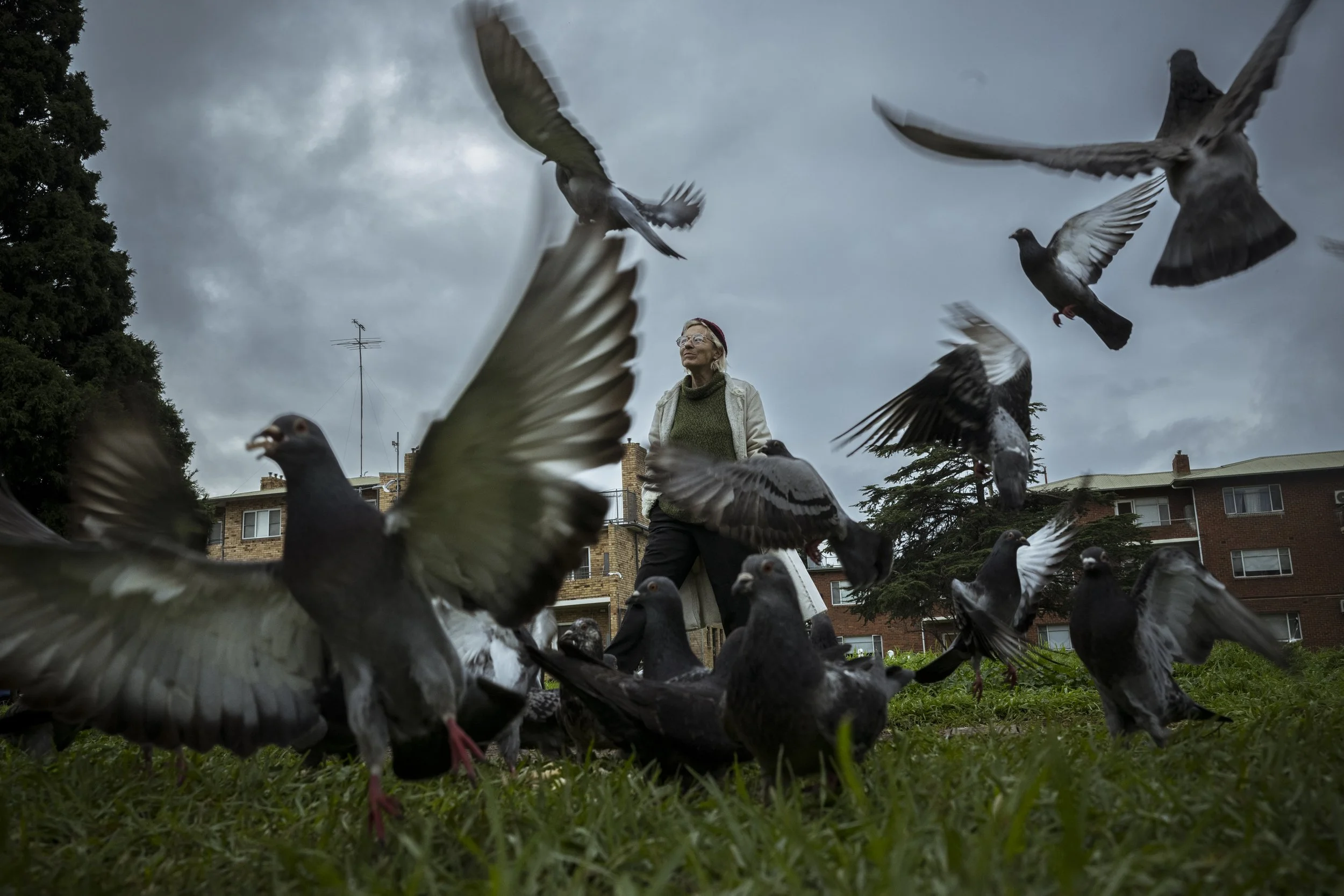
1st July 2022. Ascot Street, Ascot Vale, Australia. Clare Hanson, resident at the Ascot Vale 'Walk-Up's' walks through a flock of the ever present public housing pigeons.
For five years Hanson has fought a losing battle against the Dan Andrews led Victorian State government and its multimillion-dollar plan to redevelop the Ascot Vale housing estate in Melbourne’s north-west. The emotional toll of being temporarily relocated weighs on Clare and her fellow residents, many of whom are underprivileged, and or from a refugee background. Hanson said neighbours within the estate were living with uncertainty around their futures which was leading to mental health issues – and has been for years.
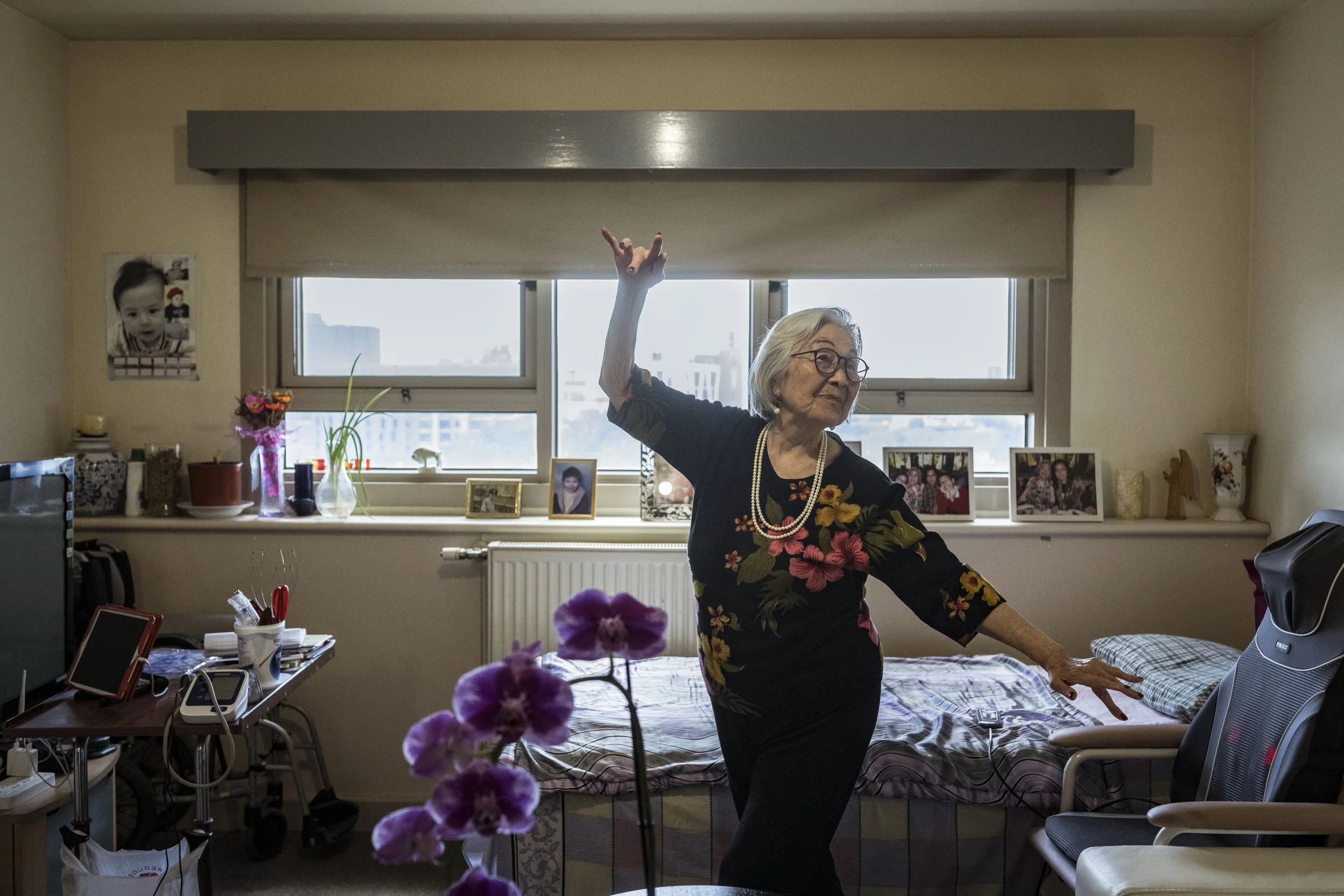
22 October 2025. 150 Melrose Street, North Melbourne, Australia. 91-year-old Me Hui Gong dances in her North Melbourne apartment of twenty years.
Gong lives in one of 13 dedicated public housing towers for the elderly. They are part of the decades-old, state-funded Older Persons High Rise Program (OPHRP), designed as a “gold standard” model of care to help vulnerable older Victorians age in place. Gong fears the state government’s demolition plan for every public high-rise across Melbourne will not just displace thousands of the city’s most vulnerable elderly people but also lose this proven support system with no clear answers on what, if anything, will replace it.
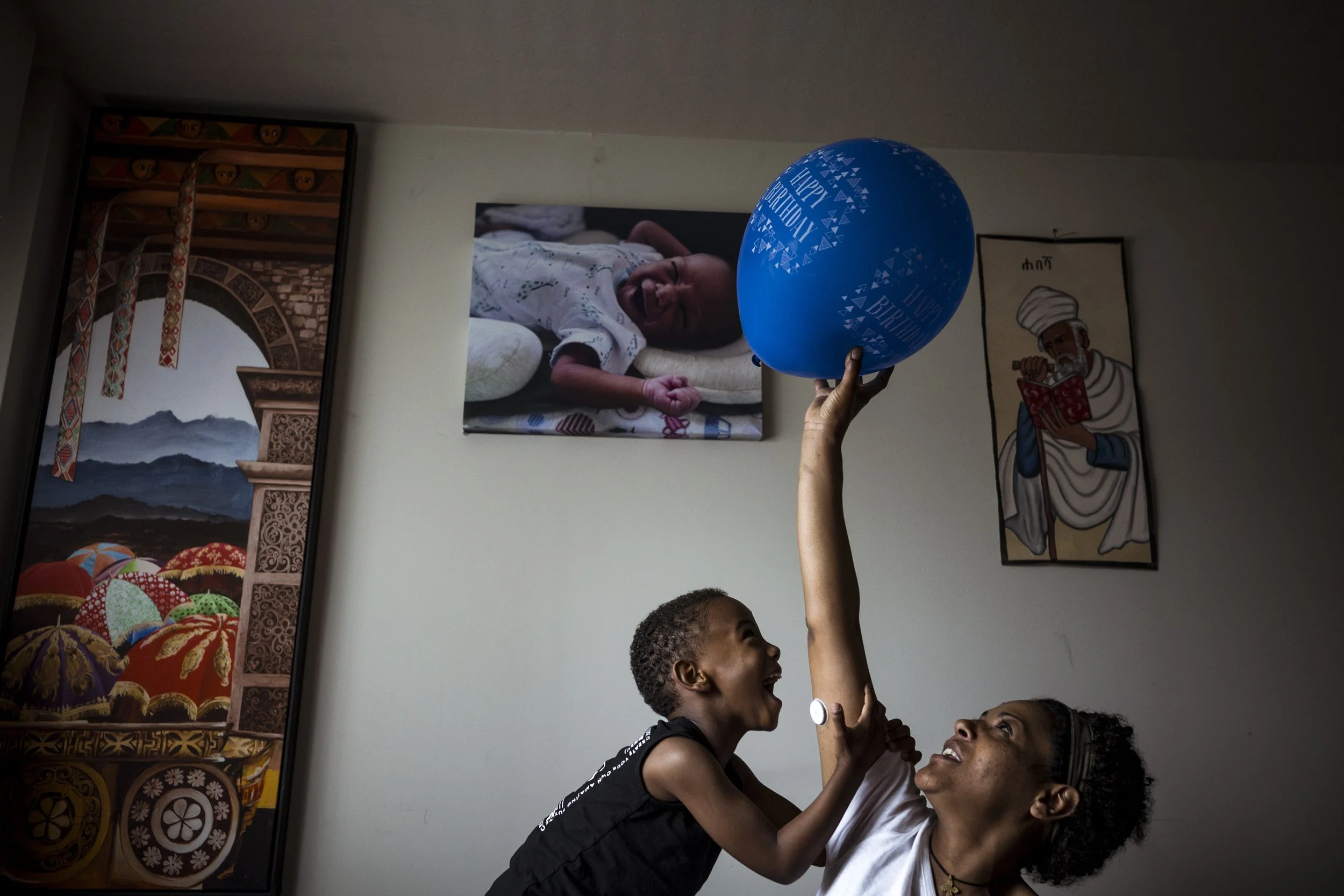
18 November 2024. 126 Racecourse Road, Flemington, Australia. Single mother Bezawit Gizaw plays in the morning light with her son Yeabsira.
'Beza' emigrated to Australia in 1996 from Ethiopia and immediately lived in public housing with her father. She completed a nursing degree and moved into private rentals before falling pregnant. Unable to support herself after developing health issues and separating from her partner, Beza was relieved and grateful that the system offered a safety net that saw her provided with a home in the Flemington towers, thus avoiding homelessness. The towers Beza and Yeabsira a sense of community, 'just like back in Africa'.
Beza is dismayed at the Government decision to demolish her home and is particularly worried about the effect it will have on Yeabsira considering how reliant they have become on the support network their neighbours have provided as she looks to re-enter the workforce.
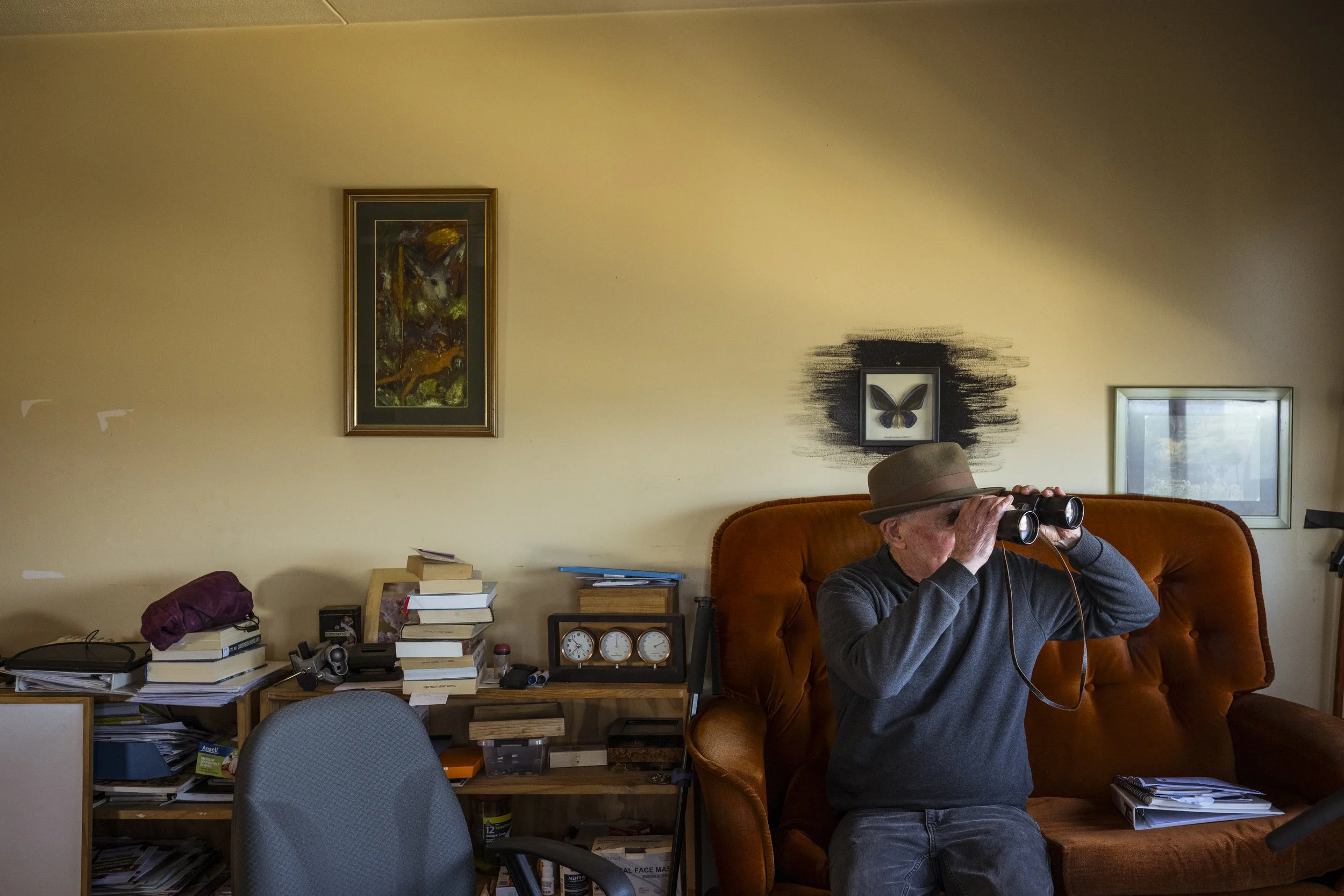
22 September 2025. 150 Victoria Avenue, Albert Park, Australia. 74-year-old Bill McKenzie watches birds flying across the nearby Port Phillip Bay from his living room sofa in his public housing apartment in Albert Park. Bill's tower is one of the dedicated towers for the elderly. He described himself as a “burnt-out alcoholic wreck” when he moved in during 2007 and the tower provided a “caring, loving environment” with full-time caseworkers who helped stabilise his life.
But in recent years, he says the system has been “cut to ribbons”. Security patrols have been reduced, and security cameras in his building have not worked for 12 months, he says. Homes Victoria (the Government body overseeing the State's public housing system) has begun placing younger residents with complex drug, alcohol, and mental health issues into the formerly tranquil older persons’ building. According to Bill, in January 2025, a younger man with severe mental health issues was placed in the building without adequate support.
“At the start, that person was more of a danger to himself,” McKenzie explains. But recently, the resident tore a pipe off a bathroom fitting and chased someone down the street, threatening to kill them.
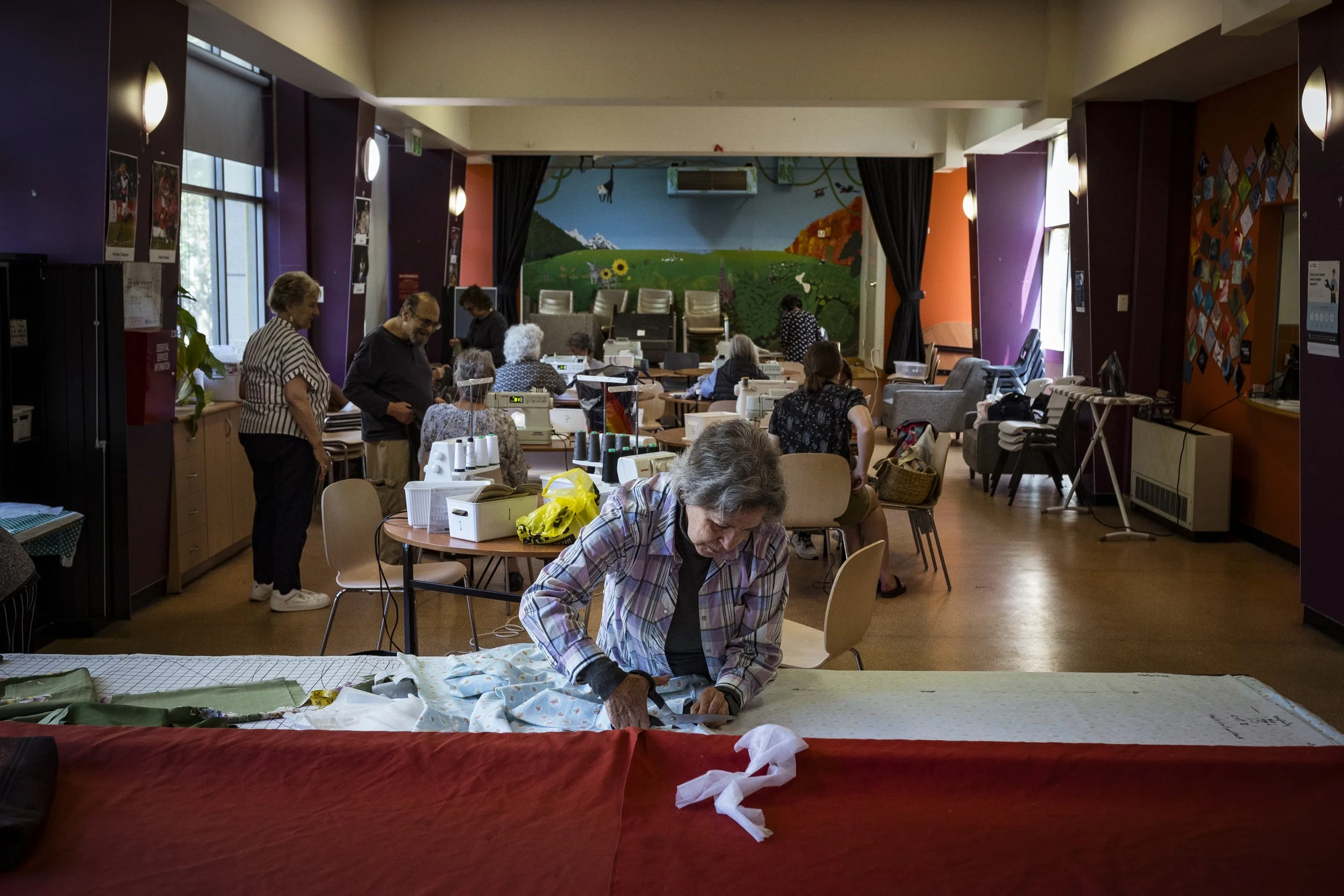
30 October 2025. 150 Melrose Street, North Melbourne, Australia. North Melbourne public housing resident, Amparo Collazos cuts out a pattern for a pair of pants she is making during her weekly sewing class.
The sewing class is one of the many activities available to the towers residents that provides them with a sense of community. Collazos built this community. When the nearby community centre was demolished and the sewing group displaced, she applied for a grant, bought overlockers and sewing machines, and restarted the group inside the tower.
“We feel here [almost like] family ... there’s a sense of support,” she says. “Sometimes we say ‘she’s my sister’ ... because we feel worried about each other.”
25 September 2023. Ascot Vale, Australia. Clare Hanson, long term resident of the Ascot Vale walk up public housing block, reacts with a sense of disbelief and anger at the announcement of the Daniel Andrews Victorian State Government's decision to demolish Melbourne's 44 remaining public housing towers. Clare has long been an advocate and a voice for her neighbours in the 'walk-ups' many for whom English is a second language and despite battling her own mental health issues has long been concerned with the impact the uncertainty around the towers future is having upon her neighbours.
7 July 2020. Nicholson Street, Carlton, Melbourne. Bright colourful drapery at an unused flat in the Carltons 'Red Building' housing estate. The Red Building is separated from the Carlton housing estate proper by two blocks and is infamous for its perception as a drug den. As of 2023 the original building, with its boarded up windows and graffiti covered frontage is blocked from view by a new tower, due for completion later this year. Whist planned for demolition, its proximity to the newly erected tower will make the task almost impossible.
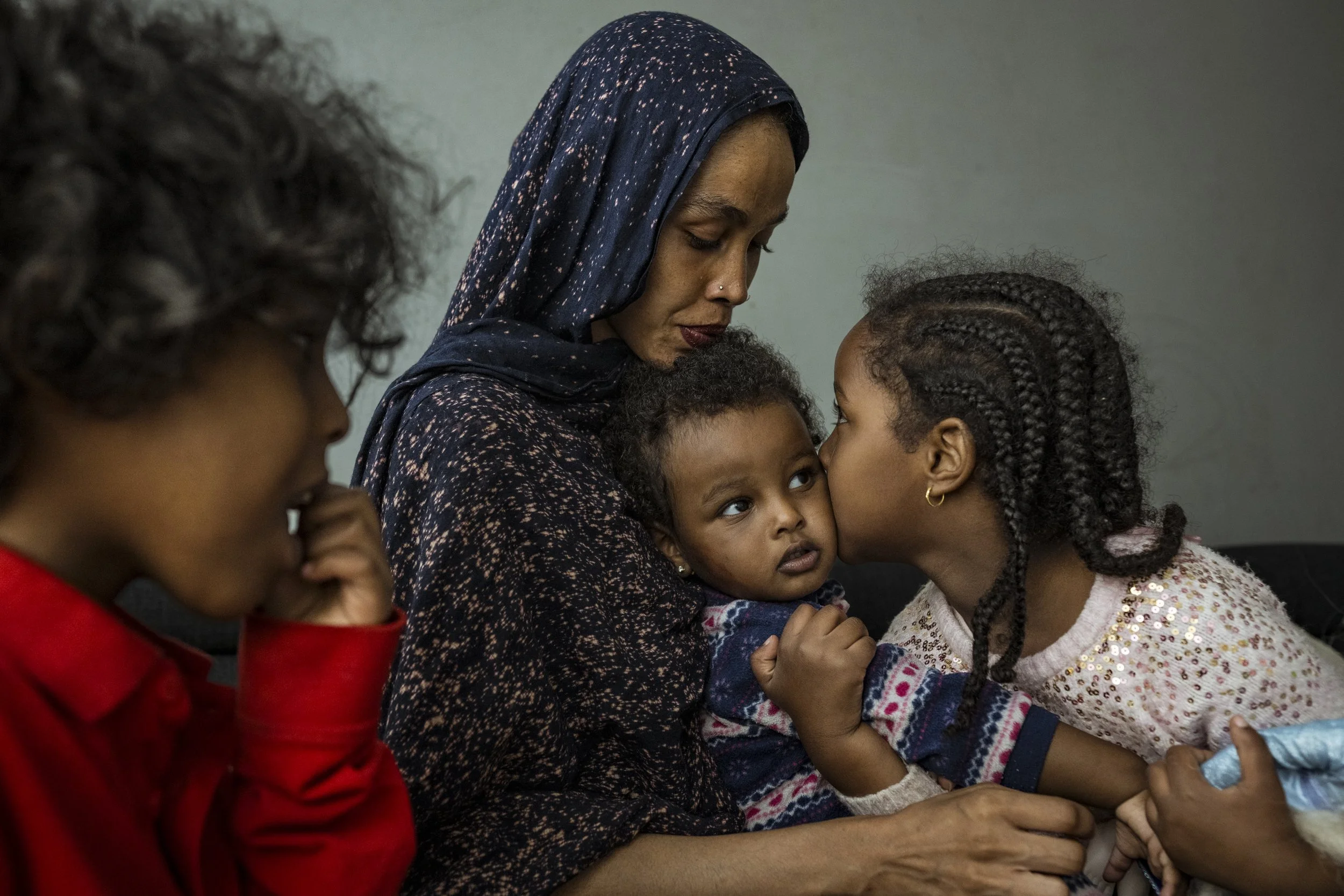
29 January 2025. 95 Napier Street, Fitzroy, Australia. Atherton Gardens public housing resident, Ragto Muse with her children Amara, 1, Ayah, 4, and Ali, 8, in their apartment,Fitzroy.
Ragto has lived most of her life in public housing, and she talks about it with a mix of pride, gratitude and quiet anger at what’s coming next. She grew up in the Carlton red brick high‑rise flats and still remembers them as a place that gave her family stability and a sense of belonging.
For her, the Atherton Gardens estate where she lives now with her five-children is a tightly knit community where services and support were woven into everyday life.
“It is a beautiful area,” she says.
“The whole community here is family,” the Somali refugee says.
“We have different cultures, different religions, different races, but we are one community. In Fitzroy, everyone’s voice matters.”
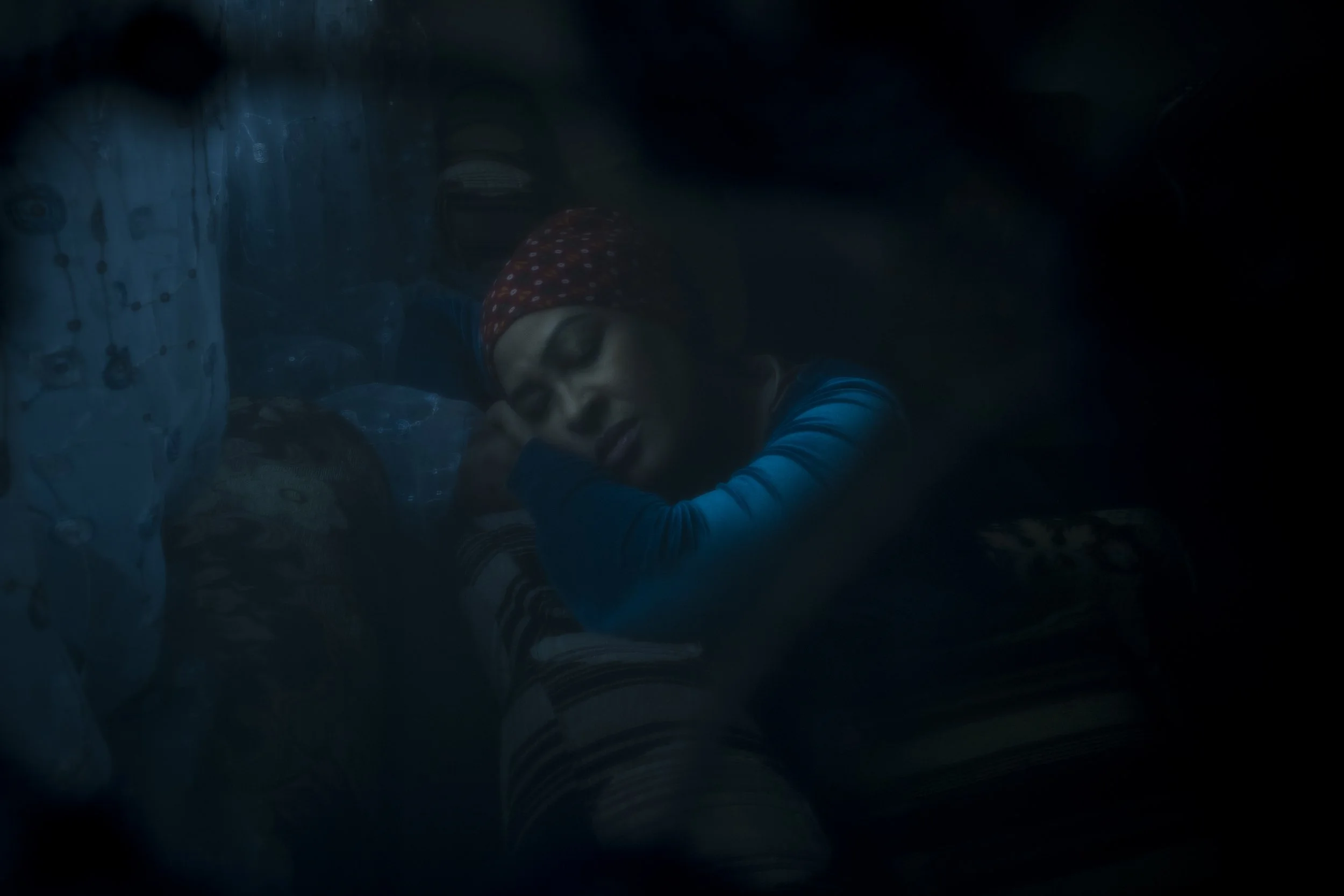
1 July 2021, 120 Racecourse Road, Flemington, Australia. Elhadi Abass, formerly a journalist who fled the unrest in Sudan, has lived on the Flemington estate for 18 years. There is no tenant representative body in the towers and the communities diversity and multitude of languages leads to conflict within. Elhadi has been a vocal advocate for the residents during their communication with various agencies - health, cleaning, mental health support - working in the estate in the wake of the 2020 lockdown but the dynamic nature of the pandemic and a proliferation of mis-information means he is now dealing with generational conflict within families, as well as the divisions across ethnicities.
27 September 2023, 120 Racecourse Road, Flemington, Australia. The sun sets over the Flemington public housing towers.
There are currently about 10,000 people living in the 44 towers and once they have been redeveloped, the estates will house about 30,000 in a mix of “social”, “affordable” and “private” housing which is a large increase in density.
The Government has refused to give a breakdown between social, affordable and private, and has notably avoided using the word “public housing” in any of its announcements.
Affordable housing constitutes those apartments which will be rented at a discount to market rates. These are aimed not at social security recipients, but people who struggle in the private market, seen by some as a form of privatisation and the end of the public housing safety net.
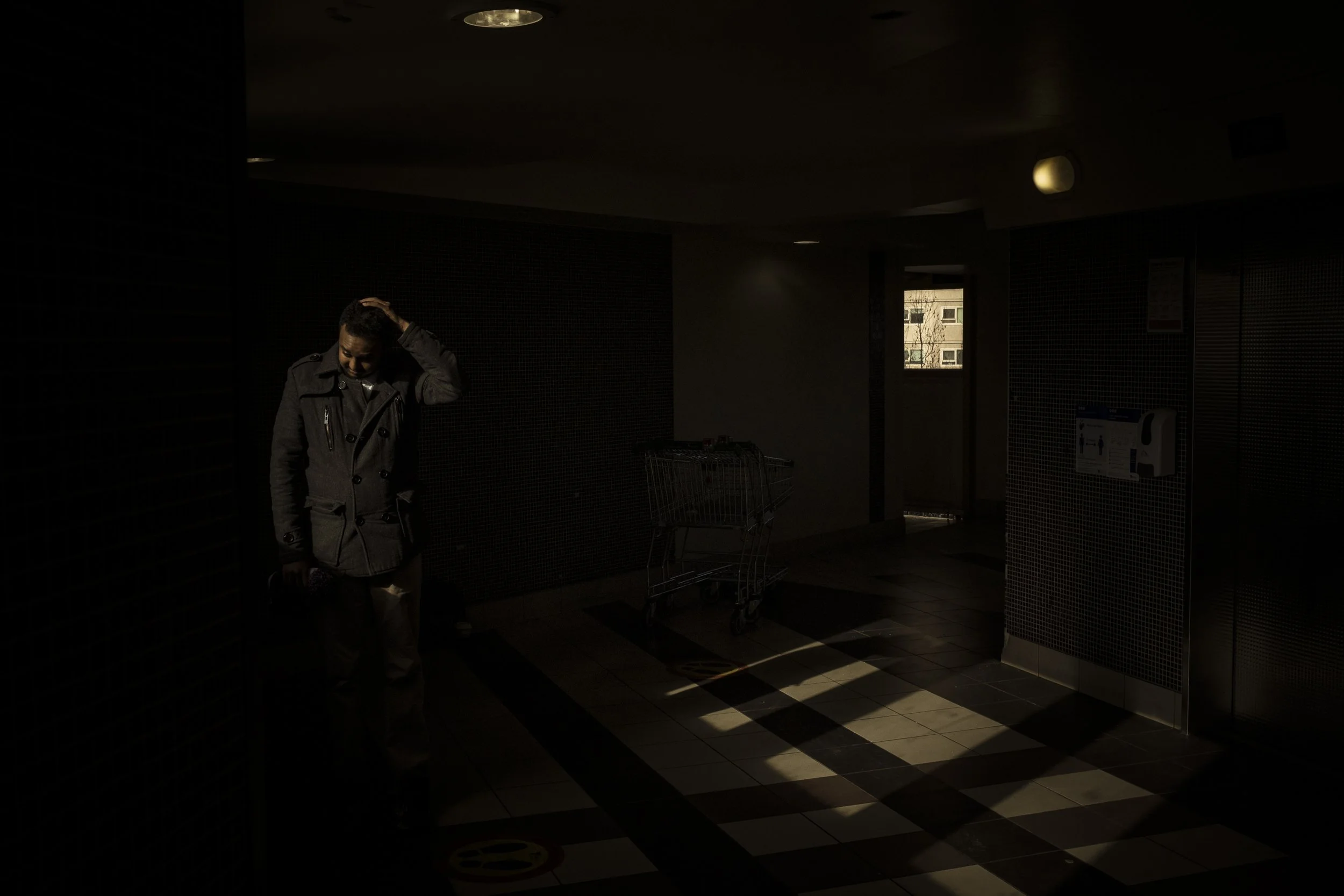
13 June 2021. 33 Alfred Street, North Melbourne, Australia. Barry Berih, born in Australia to Eritrean parents, walks through the foyer towards the lift well as he leaves his apartment building.
In 2020 Berih was one of the 11% of residents who contracted Covid-19 at his home at 33 Alfred Street, the tower that was subjected to the longest lockdown of 14 days. As the founder of the not for profit group Young Australian People, he was a key figure in the relief effort. Whilst isolating in his bedroom and with just his mobile phone and social media accounts he rallied the community to help its own. Barry says the biggest assault was to his sense of citizenship. “For those of us born here, we work in government, in private industry. We contribute to Australia. We thought we were Australian. And more than that, we are human. And suddenly we were treated differently. It makes you question everything. It was an enormous shock.”
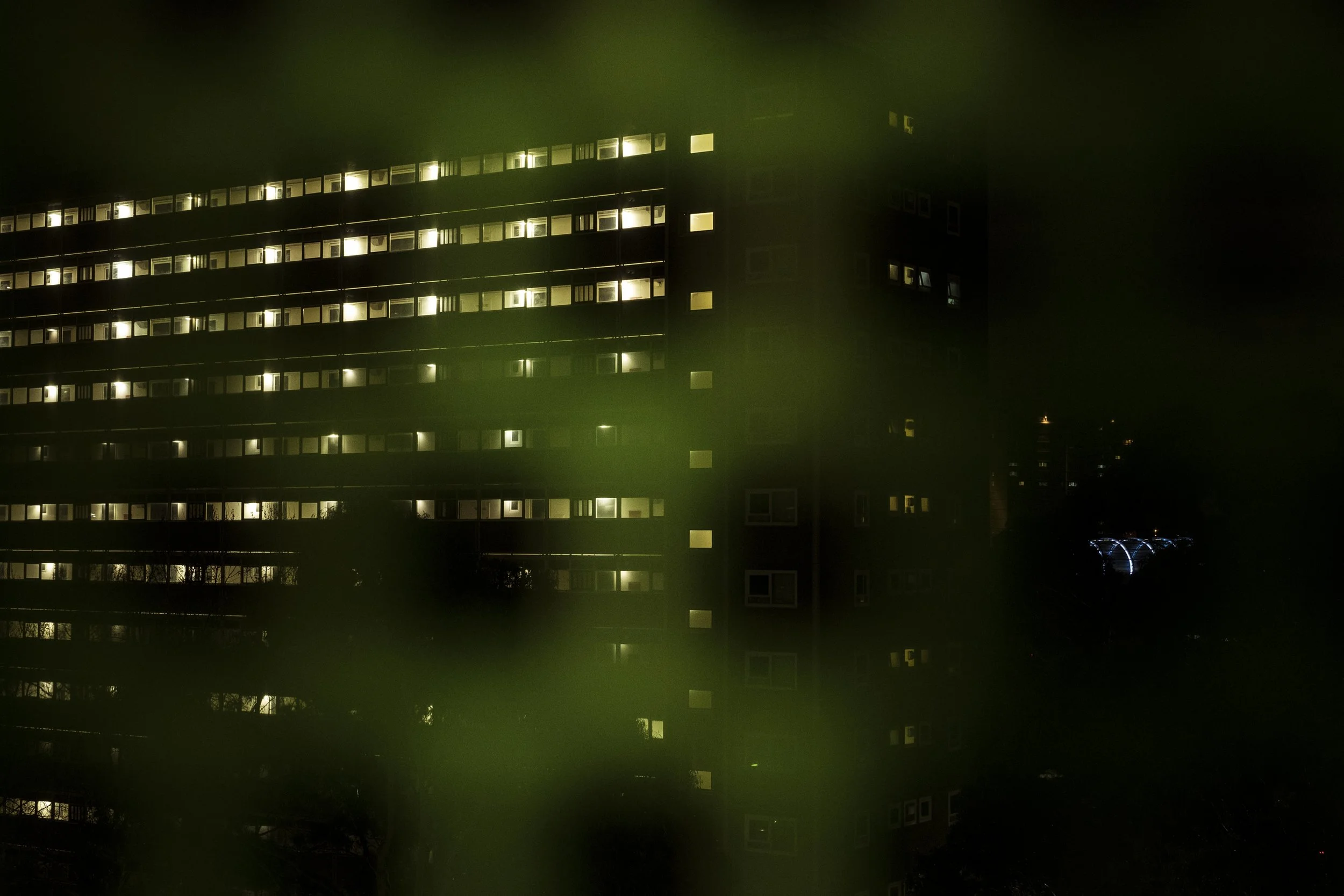
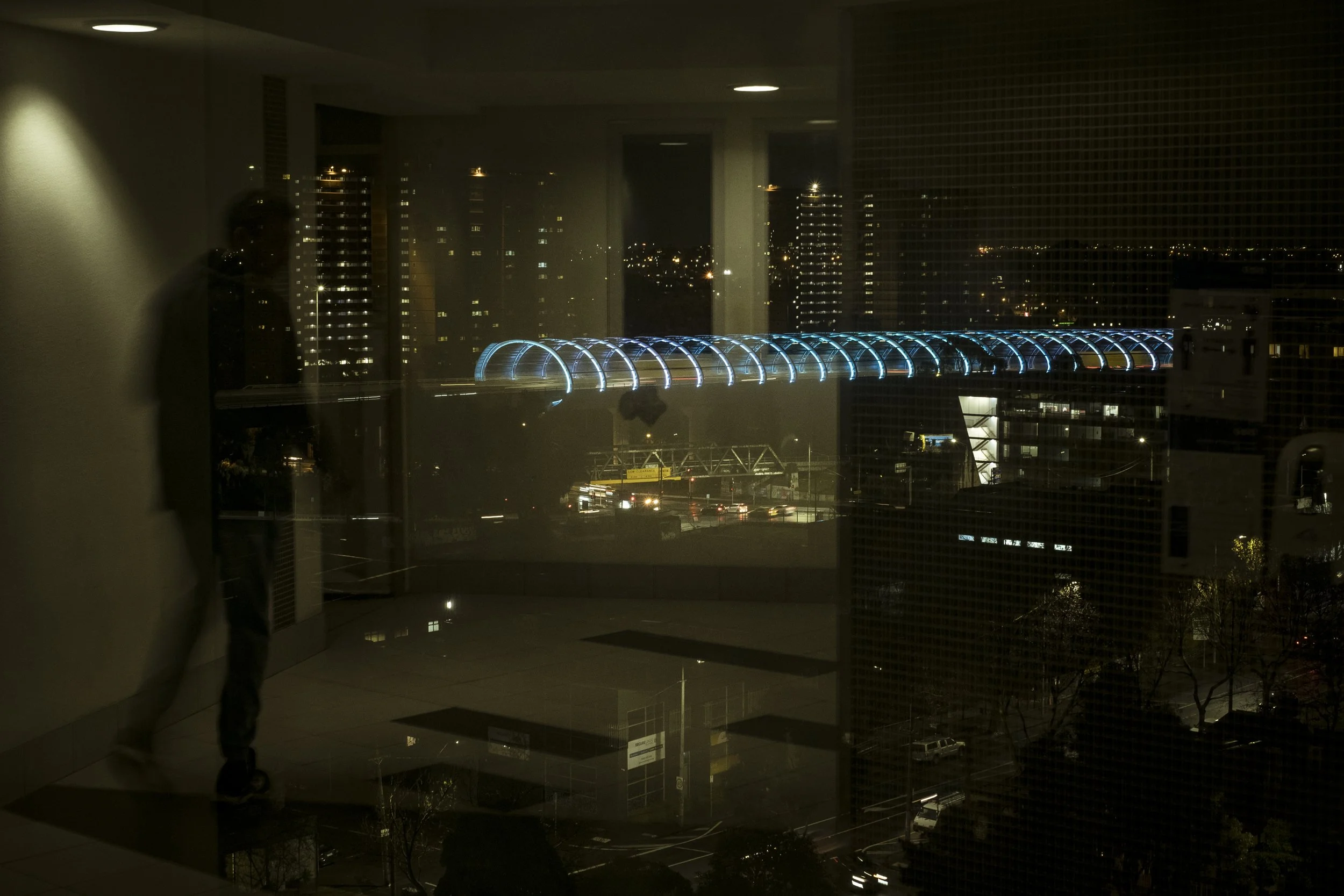
25 June 2021, Alfred Street, North Melbourne, Australia. The Alfred Street public housing towers, illuminated by the apartments front door lamps, are seen at night from Barry Berih's floor.
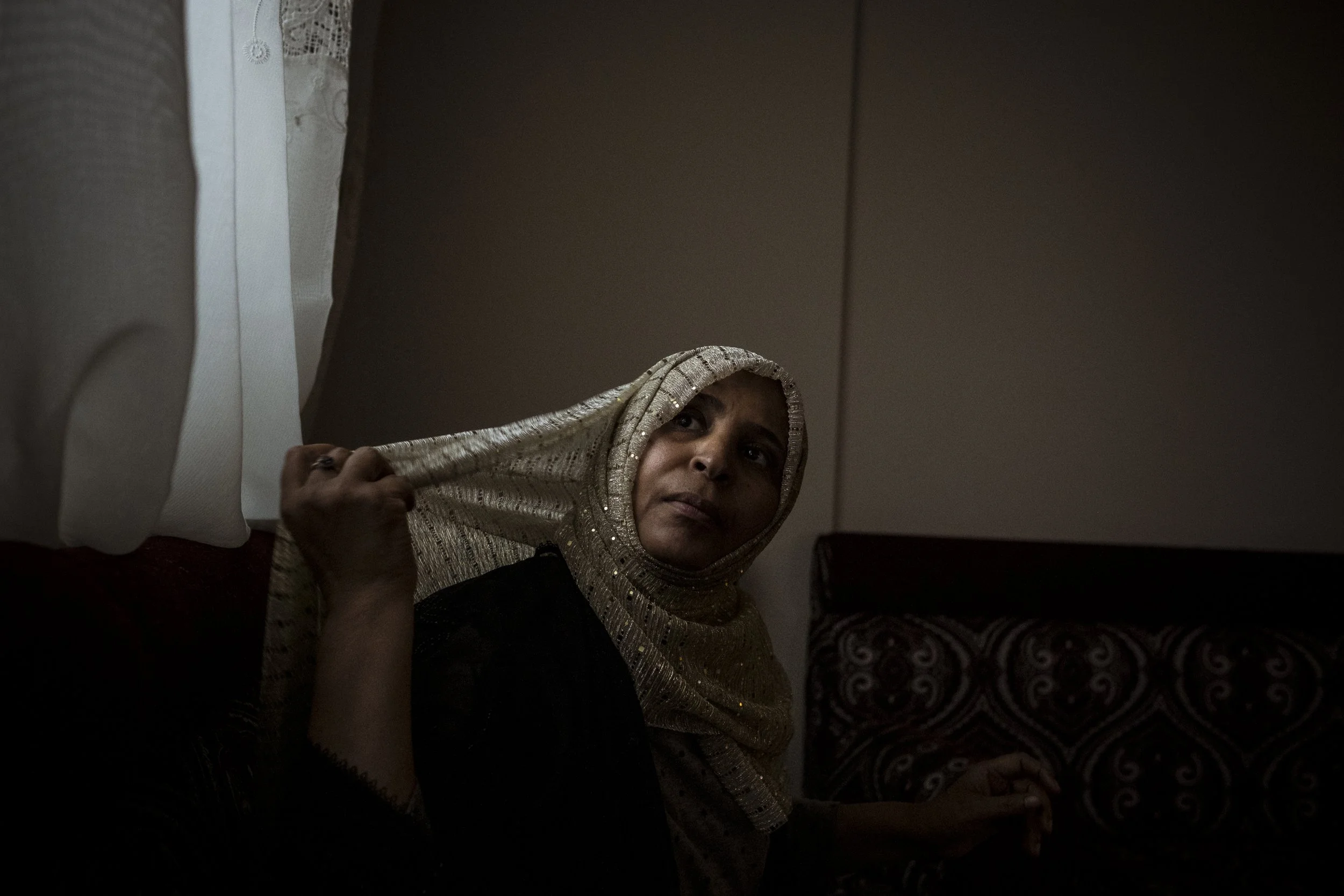
27 September 2023. 120 Racecourse Road, Flemington, Australia. Tehiya Umer adjusts her Hijab before cooking her family’s supper.
Tehiya, who is of Oromo descent, is a resident at 120 Racecourse Road, one of the public housing towers in Flemington. She was surprised when, returning home from work, she saw two women from Homes Victoria handing out literature stating that her home was planned to be destroyed. She loves Australia and puts in hours of unpaid volunteer work helping other recent arrivals adjust to their new home but does not agree with the way the Government has gone about the announcement, deeming it an unforeseen shock. "It's huge, you know, the way you tell people."
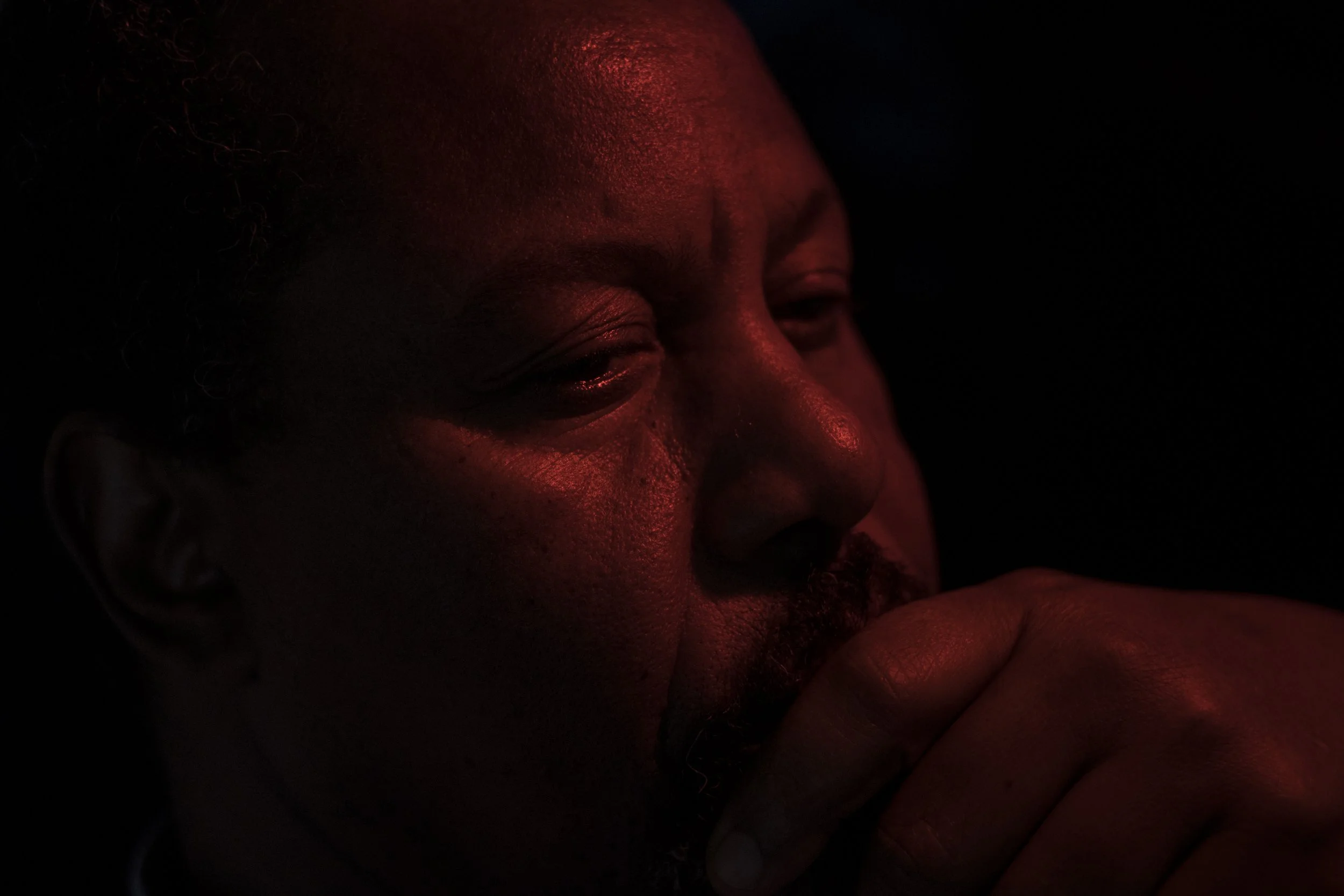
8 October 2025. 1 Holmes Street, Northcote, Australia. Ian 'Hank' Ferguson sips a coffee in his apartment. Hank is eternally grateful for his apartment and upon receiving his offer of a permanent home he rejoiced over the thought that he may never have to move again. “The insecurity of rentals is terrible,” he says.
Hank was among dozens of older residents to make submissions to a parliamentary inquiry into the redevelopment plan in early 2025.
The findings of the report were handed down on December 2nd 2025, and while the many findings favoured the residents - stating, amongst others, that there was not enough community consultation with residents and that human rights were violated - the recommendations fall short of ordering a cessation to the demolition and relocations.
13 June 2021. 130 Racecourse Road, Flemington, Australia. Ruth Eyakem rests on her sofa in the late afternoon light after a long day’s work waitressing.
Originally from Eritrea and a resident on the Flemington estate, Ruth describes the lockdown as "Undermining my belief that it was possible to be accepted as an Australian." On the day of the lockdown Ruth was on her way to fill her prescription for her anxiety medication when she was forced to return to her flat and told the medication would be delivered to her. It never arrived. Her mental health has suffered as a result. " I will never recover."
25 June 2021. 33 Alfred Street, North Melbourne, Australia. The Flemington housing community towers, which included four of the nine towers within the 1.6km locked down radius - are seen at night from Barry Berih's floor of the Alfred Street tower. All were planned for demolition in 2023.